Of course, the hurtful things Stephen had said to me had triggered something. But I hadn’t reacted in haste. I hadn’t stormed off, issued an ultimatum or declared that I never wanted to see him again.
I had still driven him to the station. I had still said I would speak to him later.
But something had shifted.
That weekend, I thought long and hard about everything that had happened, everything I had tried and everything I could reasonably expect to change.
So I made a choice.
It was time to leave.
For the first time, I wasn’t simply reacting to another painful episode in our relationship. I was consciously preparing to end my part in it.
I wasn’t waiting until I stopped loving Stephen. I wasn’t waiting for him to do something so terrible that leaving became inevitable. And I wasn’t waiting for my feelings to catch up with what I already knew.
I was choosing to leave because, rationally, I understood that staying was no longer good for me.
As I drove away from Stephen that day, I expected to cry.
Surprisingly, there were no tears.
I wondered why.
Perhaps I had simply exhausted them. Perhaps, after everything that had happened, I had finally run out of sadness. Or perhaps the absence of tears was evidence that I really was getting over him. That there was so little left of the relationship I had once cherished that there was very little left to grieve.
But it wasn’t simply that I wasn’t crying.
I didn’t feel particularly sad. Neither did I feel happy, relieved or liberated.
I had just made one of the most significant decisions of my life, and yet emotionally, there seemed to be almost nothing happening.
I felt strangely detached from the enormity of what I had done.
I didn’t know what to make of it.
What I did know was that I wanted this to be the final time.
I understood by now that if I went back, I would simply begin the cycle all over again. And it was the cycle, more than anything, that I wanted to escape.
The hope, the disappointment, the hurt, the reconciliation, the renewed hope.
Round and round we had gone, and I knew what it had been doing to me.
This time, I wasn’t going to embark on some grand reinvention of myself. I wasn’t going to devise an ambitious plan for a wonderful new life or fill my diary with activities designed to distract me from my sadness.
I had no particular enthusiasm for any of that.
But neither was I going to force myself to feel something simply because I thought I ought to.
I couldn’t make myself feel sad, and I couldn’t make myself feel happy. And I certainly wasn’t going to manufacture excitement about a new life simply because I had decided to leave my old one behind.
It was much simpler than that.
I had made a decision, and my only task was to stick to it.
Whatever emotions came, I would allow them. Whatever consequences followed, I would deal with them.
I wasn’t going to demand anything more of myself.
So I went home and expected nothing.
If I wanted to sleep, I slept.
If I wanted to eat, I ate.
If I wanted to cry, I cried.
And if I wanted to do absolutely nothing, that was fine too.
I had to expect nothing except the unexpected.
That evening, I began writing.
Now that I had decided to move on, I felt able to look back over the entire relationship and try to make sense of what had happened. Nearly five years of experiences, conversations, betrayals, reconciliations and extraordinary events that, even to me, sometimes seemed almost impossible to comprehend.
I wanted to document it all.
Partly because I wanted to understand how something that had begun with so much love and promise had become so complicated and destructive.
But also because I didn’t know what recovery was going to look like.
I had some idea of what the next few weeks might bring. I expected moments of sadness, longing and doubt. What I couldn’t imagine was how I would feel in a month’s time, or three months, or six.
Would I miss him? Would I regret leaving? Would I eventually feel indifferent? Would I ever really understand why I had stayed for so long?
I thought writing might help me find out.
It was something I could do without demanding that I feel any particular way. I didn’t have to be happy, hopeful or even especially motivated. I only had to tell the truth about what had happened and what I was experiencing.
I had also asked Stephen for a favour.
I explained that if I was going to move on, I needed him to help me in one very specific way.
If I contacted him, I wanted him to resist replying.
Even if I begged him to.
It felt rather like trying to give up a drug and asking the supplier not to give you any more, however desperately you might plead.
Stephen understood what I was asking and said he would try.
There was something rather extraordinary about that arrangement. I was asking the person I was trying to free myself from to help me stay away from him.
But I knew how powerful the attachment was. I knew how many times I had convinced myself that one more conversation might make a difference. One more explanation, one more opportunity to understand, one more chance to put things right.
I didn’t trust myself not to want those things again.
In many ways, I was trying to overcome something that felt like an addiction, largely on my own, and without knowing quite what withdrawal might look like.
All I knew was that this time I couldn’t allow myself to give up.
Because I wasn’t simply walking away from a painful and destructive relationship.
I was also trying to free myself from everything that had grown around it.
The secrets I had kept. The guilt I had carried. The shame I had felt about returning to someone whose behaviour had caused me so much pain.
And the uncomfortable knowledge that the relationship my friends and family believed I had finally left was one I had continued to return to, sometimes without their knowledge.
For a long time, I had been living with two versions of my life. The one other people knew about, and the one I was actually living.
I wanted to stop hiding.
I wanted to be able to look at my own decisions without feeling I had to defend them, explain them or conceal them.
More than anything, I wanted to find out who I was when I was no longer caught up in trying to make things work with Stephen.
And yet, for all the certainty of my decision, I knew that leaving wasn’t going to be straightforward.
I imagine leaving someone you no longer love must be considerably easier than leaving someone you still do.
Sometimes anger, hatred, fear or disgust can provide the momentum to propel you away. Sometimes the love has simply disappeared, leaving little reason to stay.
But what happens when you still love someone? When you can still see their good qualities, remember the happiness you shared and imagine the future you once hoped to have together?
What happens when the person you need to leave is also the person you instinctively turn to for comfort?
That was the difficulty I faced.
I wasn’t leaving because all my feelings for Stephen had disappeared. I was leaving because those feelings, however genuine, were no longer enough to justify staying.
And I was beginning to understand that I might never feel entirely ready to go.
Yet despite knowing all of this, that first evening remained strangely quiet.
I had expected an emotional battle to begin almost immediately.
Sooner or later, I imagined, the longing would return. The memories would soften. I would remember the good times and begin questioning whether things had really been as bad as I thought.
I had made a rational decision, but I couldn’t expect my emotions to fall obediently into line.
For now, though, there was no argument taking place inside my head.
There was just quiet.
It was an unfamiliar kind of quiet.
For so long, Stephen had occupied an enormous amount of emotional space in my life. Even when we weren’t together, I had been thinking about him, worrying about him, trying to understand him or imagining how things might turn out.
Now I was choosing to stop.
And in the space where all that emotional activity had once existed, there was almost nothing.
I found that unsettling.
I had imagined that leaving might bring an immediate sense of liberation. That I would feel lighter, happier, perhaps even excited about the possibilities ahead.
Instead, I was confronted with an emptiness I had no idea how to fill.
And perhaps that was what frightened me most.
Not the prospect of being alone, but the prospect of having nothing to occupy the space that Stephen had consumed for so long.
I couldn’t quite understand how I could still love someone, know that I was walking away from him, and yet feel so little about it.
I wondered whether the sadness was waiting somewhere beneath the surface. Whether it would arrive tomorrow, or the day after, or catch me unexpectedly in the middle of something ordinary.
I had no way of knowing.
Yet something about my attitude had changed.
In the past, I might have tried to escape that emptiness. I might have mistaken it for evidence that I needed him, that life without him was somehow less meaningful.
This time, I was prepared to experience it.
I didn’t need to fill the space immediately. I didn’t need to turn my recovery into another project, another challenge, another thing I had to get right.
Perhaps, for a while, there would simply be nothing.
No excitement. No inspiration. No great sense of purpose.
Just me, living my ordinary life, without the constant emotional turmoil that had become so familiar.
I had no idea how long it would last, or what might emerge from it.
But for the first time, I wasn’t going to run away from the emptiness.
A few days later, I told Stephen about the night I had gone into town looking for him.
He said it sounded obsessive.
I couldn’t disagree.
Then he told me he wanted to try the rehabilitation plan again. This time, though, he wouldn’t see K. He wouldn’t see any other women.
I asked him a very simple question.
Would he rather live with me and not have sex, or have sex with K and not live with me?
He said he would rather live with me.
He believed being with me gave him his best chance of getting better and, potentially, of us finding our way back to each other. I think he still imagined the rehabilitation as a kind of prologue to the future we had once thought we would share.
There was something else Stephen had told me that made me wonder whether he was finally beginning to understand himself.
During his time in hospital, he had experienced what seemed to be a small but significant revelation about his own dishonesty.
He told me that a member of staff had asked whether he had anything prohibited on him.
He had said no.
But he was lying.
He did have something concealed on his person, which he eventually handed over.
Afterwards, he assured the member of staff that he genuinely had nothing else hidden.
Then, almost as he said it, something occurred to him.
“But how can you believe me when I’ve already lied?”
For the first time, he seemed to recognise the problem from the other person’s perspective.
He had told a lie, been caught out, and then expected to be believed simply because he was now telling the truth.
He admitted to me that perhaps he wasn’t the good guy he had always believed himself to be.
He knew how to lie.
And he was beginning to understand that once someone had been deceived, telling the truth afterwards didn’t automatically restore their trust.
I found that admission strangely significant.
For years, I had tried to explain to Stephen why his dishonesty made it so difficult for me to believe his reassurances. He had often seemed unable to understand why I continued questioning him after he had offered an explanation.
Now, through something that had happened in hospital, he appeared to have arrived at that understanding himself.
Perhaps this was genuine progress.
Perhaps he was finally beginning to see something I had been trying to show him for years.
But he was also unusually frank about what he was asking of me.
Accepting my offer would be selfish, he admitted. Living with me would give him almost everything he needed to recover, but other than promising to be loyal while we tried, he couldn’t give me any assurances about what would happen between us.
Still, the commitment felt greater than it had before. More importantly, the immediate threat of other women had been removed.
So I agreed to try one more time.
The timing seemed almost perfect.
I was about to spend ten days dog-sitting at work, and Stephen could come with me. It would get him away from his flat, but also away from my house and all the memories attached to it.
We would have beautiful surroundings, space, dogs and long local walks.
If anywhere could provide the conditions for healing, this seemed like it.
And for those ten days, things were good.
Stephen travelled to the arts centre while I stayed behind and worked. We took the dogs for long walks. I cooked nice meals every day. We relaxed in the evenings. We enjoyed each other’s company. There was affection between us. Intimacy could still feel lovely, although sex remained difficult for both of us.
Afterwards, we returned to my house.
One evening, I asked Stephen whether he missed K.
He said he did.
I could understand that. He had been spending a lot of time with her and had become fond of her.
Then I asked whether he wanted to have sex with her again.
I knew what I wanted him to say.
No. I’m committed to you now. I want to make this work.
Instead, he said yes.
He would like to have sex with her again.
“It’s nice.”
“Oh,” I said. “So it’s working now then?”
“Yeah.”
He told me she was enthusiastic, which he found a turn-on.
“Is it better than with me?”
He said it was different.
I could understand different.
But then, without me asking him to elaborate, he did.
He told me he was hornier with her. She was small. She was fit.
And I wasn’t as fit as I used to be.
That hurt in a way I hadn’t expected.
This was the man who, when we first met, had told me he was interested in me, not merely the shell of a person. The man who had previously loved women much bigger than me. The man who, on our first date, had described me as small and fit.
“I thought you didn’t care about looks.”
“I thought that too,” he said. “But maybe it matters more to me than I thought.”
In nearly five years together, I had never believed Stephen had a problem with the way I looked.
I had certainly had periods when I lacked confidence in my appearance, but those insecurities had never really come from him. Whatever else had happened between us, I had never spent our relationship believing that my body was something he found inadequate.
I had lost around twenty pounds since he had first walked out of my house the previous year.
I wasn’t even sure he had noticed.
Now, suddenly, my body seemed to have entered the evidence against us.
For the best part of a year, Stephen had lived almost entirely on fast food, and his body was beginning to show the effects of it. He had developed a noticeably rounded stomach, but it made no difference to how I felt about him.
I had always imagined us growing old together, our bodies changing with the years, our faces gathering wrinkles. Loving him had never depended on him looking the same as the day we met.
And there was more.
He didn’t know whether our spark was still there.
He didn’t know whether he was still in love with me.
He didn’t know whether he was attracted to me anymore.
Perhaps, he said, these were the reasons he no longer enjoyed sex with me.
But he did know that he wanted to live with me while he got better.
Then together, we concluded what, in an ideal world, we thought Stephen preferred our future to look like.
I would be his main partner.
The woman he lived with.
The person he shared his life with.
But he would have sexual freedom with other women.
If I couldn’t accept that, he said, then he would try to get better and possibly rebuild a conventional relationship with me instead.
I could hardly believe I was hearing it.
More ambiguity.
More uncertainty.
More versions of a future in which I was expected to remain beside him while he decided what he actually wanted.
For years, our chemistry had been one of the things I had held onto. Whatever else was wrong, that had always seemed undeniable.
But chemistry isn’t compatibility.
Now he was telling me he wasn’t even sure we had that anymore.
And yet he still wanted to live with me.
I struggled to understand the reasoning.
Unless the explanation was the one he had already given me himself.
It was selfish.
We went to bed early because Stephen needed to catch a morning train to London to work with the stone specialist. I had offered to drive him to a station closer to London, which would give him another half an hour in bed.
But I didn’t sleep.
I lay beside him going over everything he had said.
And slowly, something became very clear.
There was nothing left for me to fight for.
I loved Stephen. I wanted him to get better. But taking care of him now could only be described as a selfless, sacrificial act, and that had never been why I was doing it.
There had always been something I was working towards.
Us.
I had been trying to help him become well enough for us to finally have the relationship I still believed was waiting underneath all the chaos.
If he no longer knew whether he loved me, wanted me, was attracted to me or even felt chemistry with me, then what exactly was I sacrificing myself for?
I got out of bed and went downstairs to the living room.
For the first time, I seriously contemplated leaving him in a different way.
Not storming away.
Not blocking him in anger.
Not leaving while some part of me waited for the next conversation, the next explanation or the next reason to go back.
Actually leaving.
And moving on.
Every other time I had left Stephen, I had thought almost entirely about the leaving.
I had never really thought about what happened afterwards.
This time, I did.
If I was going to leave him, I needed to imagine the after.
I needed to plan for it.
That night, I rented Wild, starring Reese Witherspoon. It is based on the story of a woman whose life has unravelled through grief, drugs and infidelity and who sets out alone to walk more than a thousand miles of the Pacific Crest Trail.
I wasn’t going to walk a thousand miles.
But I understood the impulse.
I needed something difficult enough to mark the distance between the life I had been living and whatever came next.
More than anything, I wanted to watch somebody survive the aftermath of their own life falling apart.
When the film finished, I still didn’t sleep.
I watched the clock until it was time to wake Stephen and drive him towards London.
The journey was quiet between us.
At some point, I told him that the things he had said to me the night before had been incredibly difficult to hear.
“Well, you did ask me,” he said. “And I’m not going to lie.”
That response confused me.
Because I wasn’t asking him to lie.
There was an enormous distance between dishonesty and telling the woman who had loved you for nearly six years that another woman was smaller, fitter and made you hornier.
Truth did not require comparison.
Honesty did not require humiliation.
He could have told me that his feelings had changed. He could have told me that sex felt different with somebody else. He could have admitted that physical attraction mattered more to him than he had previously understood.
All of those things would have hurt.
But they could have been said with tenderness. With tact. With some recognition that the person sitting beside him was someone who had loved him, cared for him, championed him and repeatedly tried to help him through the most difficult periods of his life.
What shocked me wasn’t simply what Stephen thought.
It was how little instinct he seemed to have to protect my dignity while telling me.
I dropped him at the station and told him I would speak to him later.
But as I drove away, I was already beginning to formulate a plan to leave him for good.
I went to my parents’ house for the weekend.
And strangely, I felt serene.
I wasn’t depressed.
I wasn’t suicidal.
I wasn’t thinking about Stephen in all the familiar ways.
I was thinking about leaving him.
And, more importantly, I was thinking about what would happen if I didn’t go back.
The longest I had ever managed without speaking to Stephen was around two weeks.
I knew those first two weeks.
I knew the debilitating emotional pain. The grief. The cravings. The almost physical compulsion to make contact and make the pain stop.
But this time I was expecting them.
I was ready to let them come.
I would allow myself to feel whatever I needed to feel and stay away from Stephen long enough to discover what existed on the other side of it.
Perhaps I would document it.
Perhaps journalling would help me understand what was happening to me as I went through it.
For the first time, I wasn’t expecting leaving to make me feel better.
I was accepting that it would probably make me feel considerably worse.
I just wanted to stay gone long enough to find out what came after worse.
I felt peaceful.
But I was apprehensive too.
I knew something painful was coming.
On Monday morning, Stephen messaged me while I was in the shower.
Before I had even had a chance to read it, he called, worried that I wasn’t receiving his messages.
He talked about returning to me later.
I told him I didn’t think that was going to happen.
Then I said the words I had spent the weekend preparing myself to say.
“It’s time for me to move on.”
I told him I couldn’t come back from the things he had said to me that night.
He seemed accepting, although something in his voice suggested he hadn’t expected this.
There was no argument.
No bargaining.
No dramatic ending.
I told him I would bring the things he had left at my house to his flat later that day.
And I told him I wanted to say goodbye properly.
In all the times I had left Stephen before, there had never really been a goodbye.
There had been anger. Blocking. Silence. Separation.
But never a goodbye.
The fact that I was willing to stand in front of him and say one now felt different.
Monumental, even.
Because perhaps, for the first time, I wasn’t leaving in the hope that something would bring us back together.
I was preparing to leave without expecting to return.
Later that day, I left work and began the journey towards Stephen’s flat.
On the way, he messaged to say he was still at the arts centre, waiting for a delivery.
I told him I would come there instead.
I wondered whether that caught him off guard. Perhaps he had imagined we would rearrange, or that I would wait until he was back at the flat.
But I didn’t want to rearrange.
I didn’t want another evening of talking, another opportunity for my resolve to weaken, another conversation that might somehow lead us back to where we had been so many times before.
I wanted to get on with leaving.
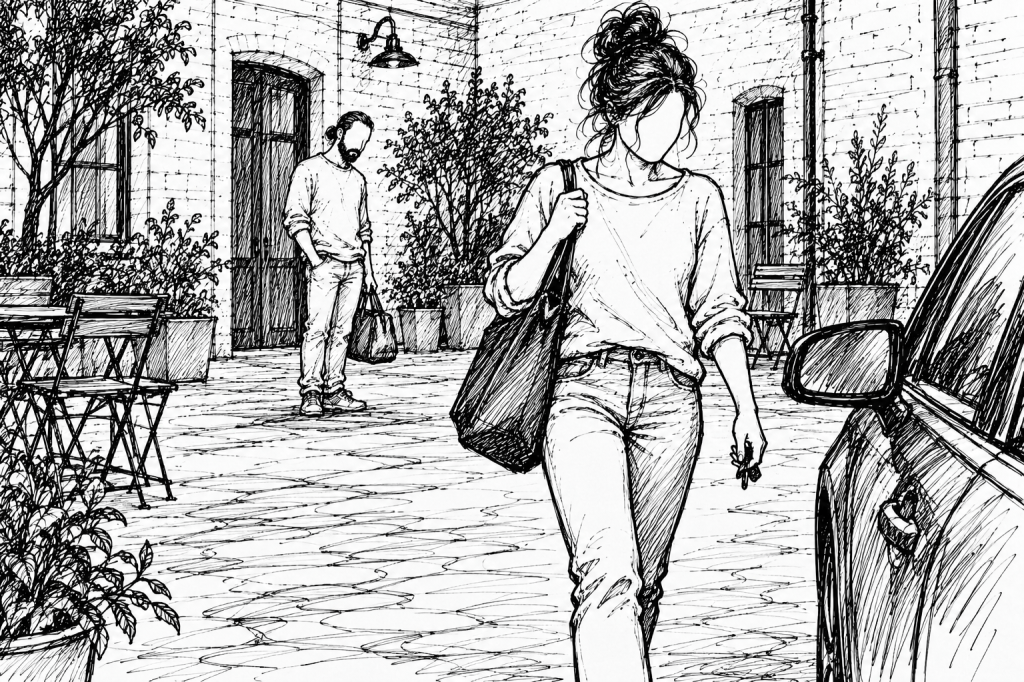
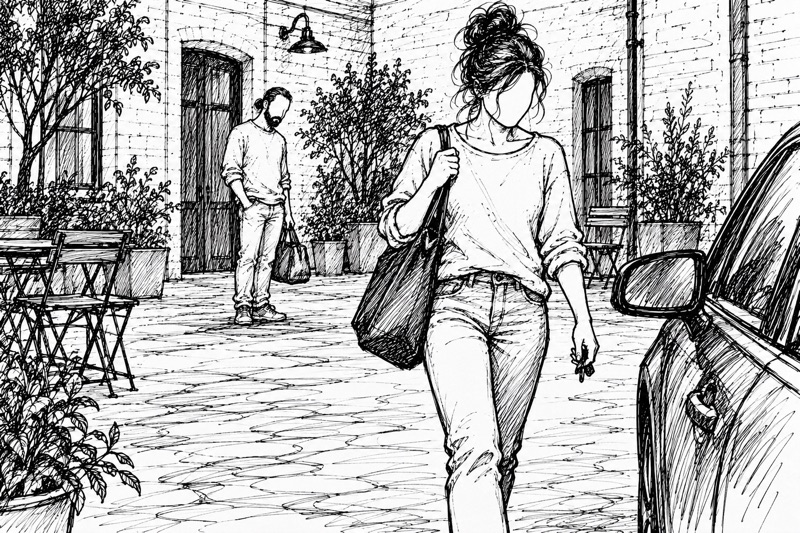
When I arrived at the arts centre, I found Stephen in the courtyard, working on something.
He looked nervous.
Almost apprehensive.
He sat down at one of the patio tables and invited me to join him.
I declined.
I wanted to remain standing.
I didn’t want to settle in, make myself comfortable or give the conversation room to wander. I knew how easily that could happen between us. How a conversation intended to bring something to an end could become another attempt to understand it, another exchange of explanations, another reason to stay.
I wanted this to be brief.
I wanted to leave before I could change my mind.
Stephen seemed surprised.
He said he had thought we were going to talk.
But I was done talking.
We had talked for years.
We had analysed, questioned, explained, argued, forgiven and tried again. I had listened to more explanations than I could count. I had spent countless hours trying to understand Stephen, and just as many trying to help him understand himself.
I had nothing left to ask.
Almost nothing.
I told him again how deeply the things he had said about my body, his attraction to K and his uncertainty about loving me had hurt.
Then I asked him one final question.
Was there anything else he wanted to say to me?
I think that was my last offering.
Some small part of me was still leaving a space for something profound. Something meaningful. Perhaps an acknowledgement of what we had shared, or what we had lost. Something that might honour the nearly six years we had spent together.
I don’t think I was looking for a reason to stay anymore.
But I would have liked something to carry away with me.
It didn’t come.
So I told him this was goodbye.
I wished him well.
And I offered him a hug.
Then I began making my way back towards the car.
But Stephen started talking again.
About work.
About things that had happened that day. About the delivery he was still waiting for.
Ordinary, inconsequential details that had nothing to do with us or the enormity of what was happening.
I wondered whether he was doing it without realising. Whether some part of him was trying to keep me there, to delay the moment when I would actually leave.
Or perhaps he simply didn’t know what else to say.
I stood listening for a little while.
And then, rather unexpectedly, I found myself thinking something almost comical.
Well, at least I won’t have to listen to these boring conversation fillers anymore.
After everything we had been through, after all the heartbreak and the extraordinary emotional upheaval of the previous year, it seemed a ridiculous thing to be thinking.
But there it was.
A small, strangely ordinary irritation in the middle of a moment I knew would change my life.
Perhaps that was significant in its own way.
For so long, I had been so consumed by the fear of losing Stephen that I had almost forgotten there were things about being with him I wouldn’t miss.
I said goodbye one last time.
Then I turned my back and walked towards my car.
I didn’t look back.
I wonder whether Stephen understood what was happening.
Whether he recognised that something was different this time.
Or whether, after so many separations and reconciliations, he had simply grown accustomed to my inevitable return.
Perhaps he thought that, given enough time, I would miss him too much.
That I would find another reason to reach out.
That the silence would become unbearable and I would come back, as I always had.
I couldn’t know what he was thinking.
But I knew what I was thinking.
I had spent almost six years trying to understand Stephen, trying to love him through his difficulties, trying to help him become the man I believed he could be.
And somewhere along the way, I had lost sight of the life I had wanted for myself.
I had loved him.
I still loved him.
But I could no longer keep sacrificing myself for the possibility of a future he wasn’t even sure he wanted.
I got into my car and headed home.
I knew the grief would come.
I knew I would miss him.
I knew there would be days when every part of me would want to undo what I had just done.
But this time, I wasn’t leaving because I had stopped loving Stephen.
I was leaving because I had finally decided that loving him could no longer be the reason I kept abandoning myself.
For the first time, leaving wasn’t the part I needed to learn how to do.
It was staying gone.
Reflection
For almost six years, I had believed that somewhere beneath Stephen’s difficulties was the relationship we were supposed to have. Every reconciliation, every attempt to understand him and every effort to help him had been sustained by that belief. I wasn’t simply trying to save Stephen. I was trying to save us. Even when the evidence suggested otherwise, I held on to the possibility that if he could become well enough, honest enough or emotionally settled enough, we might finally have the life we had once imagined. Letting go of Stephen meant letting go of that future too, and I think that was one of the hardest things I had ever been asked to do.
What finally changed wasn’t that I stopped loving him. It was the realisation that I was being asked to give everything while being promised almost nothing. I could accept that Stephen was struggling. I could accept that his feelings were confused and that he couldn’t guarantee what the future held. But I could no longer understand why I should continue sacrificing my own happiness for a relationship he wasn’t even sure he wanted. His comments about my appearance hurt deeply, not simply because they made me feel inadequate, but because they exposed how differently we had come to understand love. I had imagined us growing old together, our bodies changing without diminishing what we meant to each other. Now I was being compared with another woman, as though the years of love, loyalty and shared experience counted for less than the excitement of someone new.
Perhaps the most significant change happened during that sleepless night. For the first time, I stopped concentrating on how to leave Stephen and began thinking about how to live without him. I knew the grief would be terrible. I knew how powerful the longing could become and how easily I had mistaken relief from that longing for a reason to return. But I was beginning to understand that the pain of separation wasn’t necessarily evidence that leaving was wrong. Perhaps it was simply something I would have to endure to reach a life that no longer revolved around Stephen. I didn’t know what that life would look like, and the uncertainty frightened me. But for the first time, I was prepared to find out.
Our goodbye was quieter than I might once have imagined. There was no great confrontation, no extraordinary revelation and no final declaration that made sense of everything we had been through. I had spent years waiting for Stephen to say something that would resolve the confusion, restore my faith or make the suffering worthwhile. Even at the very end, some small part of me hoped he might find words that honoured what we had shared. But he didn’t, and I realised that I could leave without them. I didn’t need his understanding, his agreement or even his regret to make a decision about my own life. Standing there in the courtyard, I was finally allowing something to end without asking Stephen to explain it to me.
I drove away still loving him, still grieving the future I had wanted and knowing that the hardest part was probably yet to come. I wasn’t suddenly stronger, wiser or free of the attachment that had kept drawing me back. But something fundamental had shifted. For so long, I had measured hope by the possibility of Stephen changing, choosing me or finding his way back to the man I believed he could be. Now, for the first time, I was beginning to place that hope in myself. I didn’t know whether I could bear the loneliness, the longing or the uncertainty of a life without him. I only knew that I could no longer keep abandoning myself to avoid finding out. I hadn’t stopped loving Stephen. I had simply begun to believe that my own life was worth saving too.
Sometimes I thought about whether I could become just one of Stephen’s women.
It wasn’t remotely what I wanted. I didn’t want to share him. I didn’t want some diluted version of what we had had. But if accepting less meant staying connected to him, perhaps I could tolerate it for a while.
Because somewhere underneath all of this, I still believed there might come a day when Stephen chose me.
I was living for a possibility I had created in my own mind while almost everything Stephen actually did contradicted it.
Intellectually, I wanted to move on.
Emotionally, I was still completely entangled.
Stephen was telling me again how badly he was struggling. He needed me beside him. He needed my support if he was going to get better.
And I still wanted to help him.
Even sex had become tangled up in all of this.
Sometimes I allowed intimacy I didn’t really want. I consented with my body while something inside me quietly withdrew. I wasn’t being forced, and I knew I could say no, but my yes wasn’t coming from desire. I was doing it partly to preserve his interest in me and partly because some irrational part of me believed that if I gave him enough sexually, perhaps he would be less likely to look elsewhere.
This was how far I had moved away from myself.
Stephen knew I would struggle to continue supporting him if he was seeing other women, so he told me he and K would go back to being just friends.
I saw less of him anyway.
My weekends began filling with friends and family, and finally the Isle of Wight Festival arrived. I had booked a week off work for it.
I enjoyed packing my suitcase and getting ready. The train journey was pleasant and I met my friend at Portsmouth Harbour.
I was looking forward to the festival.
But I wasn’t quite myself.
I was quieter than usual. Preoccupied.
With Stephen.
We took in the people, the music, the food and the sunshine, and I tried to enjoy everything around me. But I seemed to be carrying a cloud with me.
I did my best to conceal it, although I sensed my friend knew I wasn’t my usual self.
There were practical frustrations too. It was just the two of us for company, there was a lot of walking involved, and everything was expensive. Our caravan was a £30 taxi ride each way, which meant there was no real freedom to come and go as we pleased. Once we walked through the festival gates, we were committed to staying for the day.
Still, I sent Stephen little updates.
Photographs.
Pictures of me looking festival-ready.
I shared the good bits with him because I thought he would enjoy them. I wasn’t trying to make him jealous.
On our final day, Stephen told me he wished he was there with me.
Then he said it should have been him there with me.
Then he became angry that it wasn’t us doing this together.
Something about that bothered me.
It didn’t sound like the sadness of someone regretting what he had lost. It sounded resentful.
Instead of being happy that I was having this experience, he seemed sorry for himself that he wasn’t part of it.
I reminded him that I had booked the festival after he left me.
We could go together next year, I said.
It didn’t comfort him.
He was back in his flat, stewing in his own thoughts. Struggling to get out of bed. Ruminating. He told me he needed a break, some kind of escape from his life.
He wasn’t getting better on his own.
Then I think he decided to visit K.
Just as friends.
I didn’t like it.
Later he told me they had walked by the river and then sat together reading comic books.
That bothered me almost more than if they had simply gone for a drink.
It was exactly the kind of intimacy I believed belonged inside a relationship. The quiet, companionable things. Walking beside a river. Sitting together reading.
And from everything Stephen had told me about K, I could see that she possessed some of the qualities I thought he had once admired in me.
She was cool.
Interesting.
Different.
I saw her as a threat.
I even sent Stephen a selfie of tears streaming down my face. I caught myself doing something for the first time that Stephen use to do — something I always thought was so fucking weird.
And instead of asking myself why I was still participating in a situation that made me feel this way, I began thinking about what I needed to do differently.
By the time I was travelling home from the festival, I had a plan.
I would help Stephen.
I would give him fewer reasons to want to spend time with K.
I had deliberately left the day after the festival clear so I could recover from it.
Instead, I was using the train journey home to devise a rescue operation starting immediately.
I can’t remember the exact order in which I did everything, but over the following days I threw myself into helping him.
I made a healthy chorizo soup for us.
I went to his flat and made us clear up the rubbish and do the washing-up.
We took old kitchen units and cardboard to the tip.
I took him for a walk in the woods. He recognised the place as the same woods a volunteer had once taken him to after he had broken down at work.
And then I offered him something bigger.
Come home with me for two weeks.
I presented it almost as a rehabilitation programme.
Two weeks of recovery, healing, inspiration and comfort. A break from the oppressive flat. On his days off he could return there and do some DIY if he wanted, but my house could be somewhere safe to reset himself.
I brought him home.
I even made him sign a makeshift contract.
No alcohol.
No caffeine.
No tobacco.
Regulate his sleep.
Drink a litre of water every day.
I cooked healthy meals for him. We watched television. We rubbed each other’s feet. We enjoyed each other’s company.
While I was at work, he could use the quiet time to make plans for his future.
I thought I was giving him everything he needed to get better.
And perhaps there was another hope buried underneath all of that too.
If I could make him well, perhaps I could make us well.
And then something rather wonderful happened.
The previous month, Stephen’s son had got back in touch with him.
They had been estranged for more than two years, but his son was finally ready to talk. Stephen had travelled to Bristol to see him, and now, during a visit home, his son came to spend some time with us at my house.
He talked openly about the previous two years.
At first, he had gone off the rails a little. He had embraced the freedom of being young, partying, sleeping around and behaving recklessly. But eventually, having got much of that out of his system, he had begun to reflect on himself and what he wanted from life.
He explained that he had needed the distance from his father to work out who he was, independently of him. He had needed to grow into himself.
And it seemed he had.
I was struck by how much he had matured.
At twenty-two, he appeared to have reached a level of self-awareness and emotional understanding that still seemed to elude Stephen.
I found myself wondering whether this was the stage of development Stephen had somehow missed.
Perhaps there had never been a time in his life when he had been able to step away from everything, make his mistakes, reflect on them and emerge with a clearer understanding of himself.
Perhaps some part of him was still trying to do that now.
And perhaps that was why, despite everything he had experienced and everything he had lost, he still seemed so uncertain about who he was and what he wanted.
I didn’t know.
But watching his son describe the process of finding himself, I couldn’t help wondering whether Stephen was still searching for something his son had already begun to find.
On Friday night I needed to go to work to dog-sit.
Stephen was going to an evening event at the arts centre and staying at his flat.
On Saturday I was travelling into London to have lunch with my youngest son and my ex. The week before my ex and I had done something similar with my eldest. On Sunday I was going walking with my best friend and her sisters.
Then on Sunday evening, Stephen was supposed to come back to my house.
The healing would continue.
The night before I left, we tried to have sex.
It wasn’t working.
I wasn’t into it and Stephen had lost interest.
Eventually I told him the truth.
It was difficult to make love to someone who had been sleeping with so many other people.
On Friday night, while I was at work, Stephen’s phone went offline.
Immediately, I wondered about K.
Had she gone to the event?
Would he be tempted to go back to hers afterwards?
My instincts told me he would.
But surely not.
Surely he would understand what that would mean after everything I was doing for him.
I had opened my home to him again.
I had opened my heart again.
I was trying to help him get better.
Surely he wouldn’t do that now.
I sent dozens of messages expressing my growing fear.
No I couldn’t let him know what I had been doing for Stephen. As far as he was aware, Stephen and I barely had anything to do with each other since February.
None of them delivered.
Then I systematically deleted them all.
I didn’t sleep easily.
When I woke the next morning, Stephen finally made contact.
He saw the stream of deleted messages.
He couldn’t read them but he said it looked obsessive.
I asked him if he was at K’s.
He was.
I asked if they had been intimate.
They had.
Something in me collapsed.
I told him to collect his things from my house.
I didn’t want to see him.
He seemed confused.
But he was supposed to be coming back to me that weekend, he reminded me.
I couldn’t fathom how he couldn’t see the contradiction.
How could he sleep with K and then return to me for support, comfort and healing?
How could those two things coexist in his mind?
I dragged myself into London.
I was meeting my son and my ex for lunch at the Walkie Talkie building. It wasn’t that I hadn’t been looking forward to seeing them.
I just had almost nothing left.
The emotional strain of trying to hold onto Stephen while watching him do so little to protect whatever remained between us was becoming unbearable.
We met.
We had lunch.
I talked.
I smiled when I needed to.
But I didn’t feel as though I was occupying my own body.
I was performing normality.
Inside, I was crying.
Confused.
Falling apart.
Somehow I made it through the afternoon and we said our goodbyes.
Then I got onto the Tube to go home.
And then the tears came.
I couldn’t contain them anymore.
More than anything, I couldn’t face walking through my own front door.
If Stephen had done what I had asked, he would already have been there to collect his belongings.
I even guessed correctly that he had K drive him to my home to collect them.
His keys would be waiting for me.
Another ending.
And suddenly I began thinking about ways I could kill myself before I got home.
There was the Underground.
There were trains.
Train tracks.
A very high railway bridge just metres from my home.
Or I thought about going home, running a bath and cutting my wrists.
It wasn’t that I had never had a suicidal thought before in my life. But this was different. I was contemplating my options. They seemed easy.
This was the closest I had ever come to seriously contemplating whether death might be the only way to escape the pain I was in.
And that frightened me.
I didn’t want to be thinking like this.
I didn’t want to die.
But I couldn’t see how to go home and face what was waiting for me there either.
Before the Tube reached Paddington, I messaged my ex.
He told me to get off my train.
He would get off his and come and find me.
He had a gig in Hammersmith that evening, but there was enough time to meet. I’m certain he would have abandoned the gig if he thought it necessary.
I got out at Tottenham Court Road and found somewhere away from the crowds where fewer people might see me crying.
My ex found me.
He took me somewhere quieter and more sheltered where we could talk.
I can’t remember much of what I said to him.
My inability to stop loving Stephen had made me uncomfortably secretive.
A year of concealing the extent of my involvement from those who truly loved me, was weighing heavy on me.
I remember what I felt.
Confused.
Helpless.
So very, very hurt.
Utterly humiliated.
Betrayed.
Perhaps somewhere inside all that pain I was beginning to understand something I had resisted for a very long time.
Whatever shape Stephen occupied in my life, I seemed to know pain.
Perhaps removing Stephen from my life was the only way I could remove the pain.
But that frightened me too.
I couldn’t imagine what my life would look like without him.
More than that, I couldn’t imagine what it would feel like without all of this.
The worrying.
The analysing.
The rescuing.
The hoping.
The waiting.
The pain itself had taken up so much space that I couldn’t conceive of what would replace it.
Nothingness frightened me.
And in that moment, death somehow seemed like a logical alternative to that nothingness.
I needed somebody to tell me there was another option.
Even if that option looked empty from where I was standing.
My ex was so good with me.
He listened.
He supported me without becoming overly dramatic or frightened by what I was saying.
And there was something incredibly freeing about simply being allowed to cry and having somebody witness me in that broken state.
He gave me enough understanding, and enough hope, to get me home in one piece.
I survived the night.
The following day I was supposed to go walking with my friends.
I didn’t feel like going.
But I made myself.
I hadn’t seen them all together for such a long time and I told myself that walking in the sunshine had to be better for me than staying at home.
Again, I felt physically present and emotionally somewhere else.
At least with them I could talk.
I could tell them about Stephen.
I could say how much it hurt.
Stephen and I barely spoke that following week.
I think I moved through the days automatically.
The following weekend I went to a silent disco with my best friend and a couple of her university friends.
I’d never been to one before.
It was actually a lot of fun.
And still, I was only half there.
My mind was on Stephen.
I knew I wanted to see him.
I no longer knew why.
We had exchanged some messages. He had been at K’s but was now in town, he said, not knowing what to do with himself.
I suggested we might meet when I got back from London. He neither confirmed nor declined.
After the disco I went for a drink with the girls, but by then all I really wanted was to get home and see Stephen.
When I arrived back in our town, his phone was offline.
I couldn’t reach him.
Immediately I wondered whether he had gone back to K’s.
I drove to his flat.
He wasn’t there.
So I drove back into town.
I parked the car.
And then I started looking for him.
I walked around for about an hour.
I went into every pub, every bar and every restaurant I knew he frequented.
I was looking for Stephen.
Or Stephen and K.
I was intense.
Obsessive.
Determined to find him.
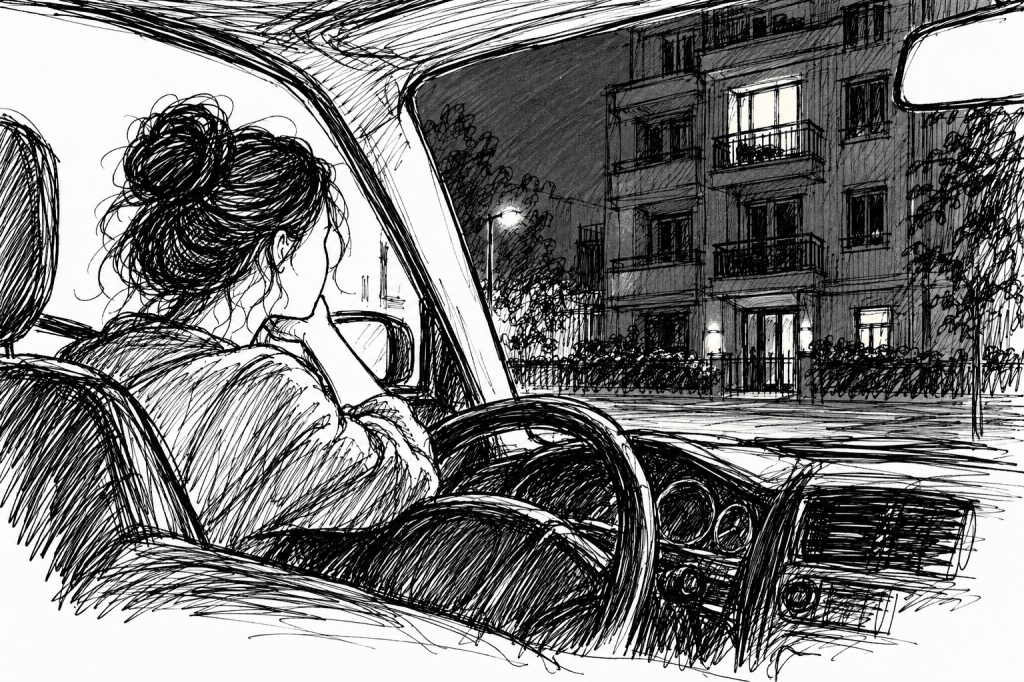
When I had exhausted every place I could think of, I got back into my car and drove to K’s flats.
And I sat outside.
Waiting.
Watching.
Wondering whether I might see one of them.
At some point, sitting there in my car, I seemed to become aware of myself from the outside.
What has happened to me?
What am I doing?
What outcome am I even hoping for?
I didn’t like what I had become.
Once, I had had a boyfriend who adored me.
Now I was sitting outside another woman’s home trying to discover whether he was inside.
My life had become almost unrecognisable to me.
Eventually, I drove home.
Dejected that my hopeful plan to find him had failed.
But there was something even more disturbing that I had to admit to myself.
I had no fucking idea what I would have done if I had found them.
Reflection
By June, I had begun living between two entirely different understandings of my life. Intellectually, I knew that the relationship I wanted no longer existed. I knew Stephen was continuing to pursue other women, that his promises offered little reassurance and that my efforts to help him were costing me dearly. Yet emotionally, I was still living for the possibility that something might change. I had begun contemplating arrangements that contradicted everything I believed about love and commitment, not because my values had changed, but because losing Stephen altogether seemed even more unbearable. I was no longer asking whether the relationship could give me what I needed. I was asking how little I could accept and still keep him.
Looking back, I can see how completely I had returned to the role of rescuer. I had barely recovered from my own emotional exhaustion before I was cooking, cleaning, organising and creating a rehabilitation programme for Stephen. I genuinely wanted him to get better, and there was satisfaction in feeling useful to someone I loved. But underneath that compassion was a hope I struggled to acknowledge. Perhaps if I could make his life comfortable enough, safe enough and loving enough, he would no longer need to look elsewhere. I was trying to create the conditions in which Stephen might finally choose me, without recognising that being chosen should never have depended on how much of myself I was prepared to give.
What happened that weekend brought me frighteningly close to the limits of what I could endure. I had spent so long trying to manage Stephen’s distress that I had almost stopped recognising the seriousness of my own. My thoughts on the journey home weren’t simply an expression of heartbreak. I had reached a point where I was contemplating death as a way of escaping emotional pain that felt impossible to survive. I didn’t want to die, but I couldn’t imagine how to continue living with what I was feeling. What stays with me is the kindness of someone who had no obligation to rescue me, but who came when I needed him. For a little while, I didn’t have to explain, analyse or take care of anybody else. I could simply fall apart and allow someone to care for me.
And yet, even that frightening experience wasn’t enough to break my attachment to Stephen. Within days, I was longing to see him again, searching for him through the town and eventually sitting outside another woman’s home. I can scarcely reconcile that behaviour with the person I had always believed myself to be. I had become so consumed by the need to know where Stephen was, who he was with and whether there was still some possibility of reclaiming him that I was acting in ways I would once have found incomprehensible. I wasn’t proud of those moments. But I can recognise now that they came from a state of desperation in which uncertainty had become almost intolerable and finding Stephen seemed, however irrationally, like the only way to relieve it.
Perhaps the most disturbing realisation was that I was no longer entirely in control of the direction my life was taking. My happiness, my peace of mind and even my sense of who I was seemed increasingly dependent on Stephen’s behaviour. I could recognise the damage, understand the choices I needed to make and still find myself doing the opposite. I had spent years believing that if I could understand Stephen well enough, I might find a way to help him. Now I was beginning to confront a much more frightening question. How had I become so determined to save someone else that I was losing the ability to save myself?
The first few days of blocking Stephen were surprisingly easy.
I was so angry, disappointed and frightened by everything I had discovered that those feelings carried me through.
I called the ward and asked them to remove me as Stephen’s next of kin. The kind woman I had met there sounded surprised and concerned and asked me why.
I told her I had recently discovered more lies.
Lies on top of lies.
I also began reaching back towards people I had lost touch with during the years I had been consumed by Stephen and, more recently, by the slow disintegration of our relationship.
I spoke to my oldest and dearest friend.
I had maybe only met her once since the visit Stephen and I had made shortly after he revealed that he had been suspended from work. We had barely been in contact for nearly five years.
She was angry for me.
At one point she joked that Stephen would probably try to sleep with one of the other patients.
She didn’t realise it was an all-male ward, but I knew exactly what she was getting at.
I spoke to my therapist too.
One of the things bothering me was Stephen’s paintings.
There were seven enormous, expensive paintings still hanging on the walls of my house. I never wanted anything to do with him again, but I had promised that I would look after them until he was ready to take them.
I felt guilty at the thought of doing anything else.
Other women might have sold them, burned them or simply given them away.
I couldn’t do that.
My therapist told me they were no longer my problem. Whatever needed to happen to get them out of my house was part of releasing myself from Stephen and moving on.
The first weekend after we stopped speaking, my son and his girlfriend were moving into the home they had just bought.
They had hired a removal van.
I saw my opportunity.
I asked my son whether we could use it afterwards to take all of Stephen’s paintings to his flat. He was almost certainly still in hospital, so I knew I could do it without having to see him.
Once the kids had finished their move, my son’s girlfriend and I carefully removed the seven huge paintings from my walls and loaded them into the van.
Even then, after everything Stephen had done to me, I was meticulous with them.
I didn’t want a single one damaged.
That was simply who I was.
When we reached the flat, we carried them inside just as carefully and stood them against the walls.
The place was cramped. There was stuff everywhere.
I knew it would be the last time I went there, so there were two things of mine I wanted to find before I left: my designer suitcase and my grandmother’s wooden sewing box.
The sewing box had its own little history.
When Stephen first moved in with me, he had started dismantling it because he wanted to strip away the paint and return it to its original wooden finish.
He never finished it.
In truth, he had barely started.
He had eventually taken it to the flat because he still intended to restore it. Seven months later, all he had managed to do was begin sanding it.
Five years after he first promised to restore my grandmother’s sewing box, it remained in a state of disrepair.
Another unfinished project.
Another promise never quite fulfilled.
Another of Stephen’s good intentions that had made something once beautiful, now broken and ugly.
Then I looked for my suitcase.
I had asked Stephen for it a few months earlier and he had told me it would take too long to locate.
It took me less than five minutes.
I checked inside.
Thankfully, there were no stranger’s knickers in there.
We locked the flat and left.
I felt relieved that the paintings were finally out of my house, although part of me still felt guilty that nearly £20,000 worth of art was now sitting uninsured, in a vacant flat in an unsavoury part of town.
The more recent £10,000 art purchases were already there, still in their unopened boxes.
Even while trying to disentangle myself from Stephen, I was still worrying about the consequences of his choices.
Later that day, I returned his keys to his father.
Standing briefly on his doorstep, I told him about the extent of the lying and cheating I had discovered.
He said he was sorry. He didn’t know why Stephen was like this.
I also told Mum and Dad about Stephen’s recent admission to hospital.
Dad was delighted to hear that the paintings had finally gone.
A few weeks later, the situation inspired him to write a poem about Stephen and me. It captured something about the inevitability of our demise — some of it caused by the things Stephen had done, and some by events that had been beyond either of our control.
On the surface, I was doing everything I needed to do.
I had blocked Stephen.
I had removed myself as his next of kin.
I had spoken to my therapist.
I had reconnected with friends.
I had returned his possessions.
I had given his keys back.
I had begun removing him, physically and practically, from my life.
I had made a decision.
Then, after about two weeks, something changed.
I couldn’t stop thinking about him.
There were days when I physically ached inside. I struggled to concentrate at work. My thoughts kept returning to Stephen no matter what I did.
It felt remarkably like craving a drug.
And, just as with a craving, my mind began searching for reasons why giving in might actually be reasonable.
I began constructing an argument that would allow me to contact him again.
I felt compassion that he had so few people supporting him.
Perhaps I could still care about him without wanting him back.
Perhaps I could still be part of his life without hoping he would choose me.
Perhaps, for the first time, I could have some kind of relationship with Stephen while fully accepting that the romantic possibility between us was dead.
That felt safe.
So I unblocked him.
And I reached out.
Stephen was pleased to hear from me, although he said he had never expected to hear from me again.
In some ways, he told me, he had been moving on with his life.
Perhaps that was something I should have paid more attention to.
Whenever I withdrew from Stephen, he seemed able simply to continue with his life.
He never went out of his way to find a route back to me.
I was the one who withdrew.
And I was the one who returned.
It made me wonder whether what I was experiencing was love at all, or whether I had developed some strange psychological dependency on him.
He told me that the hospital had allowed him out for a day to spend time with the volunteers from the arts centre. They had gone river swimming and he had had a fantastic day.
I was glad he had enjoyed himself.
Maybe Stephen wasn’t lacking in support to the extent I allowed myself to believe.
But I also wondered whether he ever experienced anything resembling the pain I had felt while we weren’t speaking.
It made me wonder which of us had the greater problem with attachment.
He was only days away from being discharged by then.
There was a care plan being discussed: visits, appointments and support that would be in place once he returned to the flat.
He still hadn’t been back there and therefore hadn’t seen the paintings filling his hallway, although his father had told him they were there.
A while after his release, I went to visit him.
He was clearly better.
Some of the paintings were already on the walls.
He showed me a schedule he had made while he was in hospital — a structured timetable for sleeping, eating and working.
It struck me that the hospital team had been encouraging him to do many of the things I had spent years trying to help him do.
There had also been a woman visiting the ward whose role involved helping patients to give up smoking.
Her name was A.
She had told Stephen she could help him, and he had embraced that support. But he also told me that they had remained in contact since he left the hospital.
They had been on a couple of walks together.
Something about that immediately made me uncomfortable.
I wondered about the professional boundaries involved and what exactly was developing between them.
Stephen reassured me that they were simply supportive friends.
He told me that A was a former prostitute and addict that was turning her life around, and volunteering at the hospital was her way of paying it forward. She was vulnerable herself.
That word registered.
Vulnerable.
I had heard variations of this story before.
In the middle of May, Stephen and I met for brunch.
He was on good form, although I noticed him staring at the waitress.
I wanted to be his friend.
I still wanted to support him.
He told me he was worried about hurting me.
I told him that this was my choice and that it was up to me to decide how much I could handle.
At the time, that felt like strength.
I’m not sure it was.
We were having such a nice time that I asked whether he wanted to come back to mine and watch a comedy programme.
I made the boundary explicit.
There would be no intimacy.
Since discovering the truth about U, I simply didn’t want that.
We had a lovely evening.
We binge-watched about eight hours of comedy, sitting at opposite ends of the sofa.
And I hated resisting the urge to be more than friends.
When it finished, it would have been easy to let him stay.
I didn’t.
I was determined to maintain the boundary I had set, so I insisted on driving him home.
When we arrived at his flat, he got out of the car with barely a goodbye.
No hug.
I drove away wondering what it meant.
Over the following days, I began to feel depressed.
I had spent a lovely day and evening with someone I still loved while forcing myself to behave as though I no longer wanted what I desperately wanted.
It had taken its toll.
I was beginning to realise that I didn’t like pretending to be Stephen’s friend.
Perhaps I couldn’t do it.
I had been feeling low since we had met up, and then the depression was compounded by a strange physical illness. I became quieter. Stephen understood that I wasn’t feeling well, emotionally or physically and we talked less.
In the middle of all this came Eurovision.
I had grown up watching Eurovision with my family and loving it, although I had lost interest as an adult.
Stephen was a huge fan.
Since meeting him, we had watched it together every year, and through him I had rediscovered some of the enjoyment I’d had as a child.
We had spent some lovely evenings together over the years watching it.
Part of me hoped he might suggest that we watch it together again this year.
He didn’t.
So I watched it alone.
I wondered what he was doing.
And I felt incredibly sad.
During those days I began seriously questioning whether this idea of friendship was sensible.
Watching Stephen continue with his life while I tried to occupy some smaller, safer place within it seemed to hurt almost as much as losing him.
I decided I needed to see him and tell him that we should stop contact.
We had discussed an idea before: perhaps we could separate completely for a year, but agree on a date and time in the future when we could meet again, if we were both ready and still wanted contact.
It seemed like a mature solution.
A clean boundary.
Something definite.
It supported a necessary separation but allowed hope that we might still find each other in the future.
Before I could propose it again, I asked him how he had spent Eurovision night.
A had come over.
They had danced to the songs together and had fun.
I felt gutted.
I had been sitting at home alone, watching something that had belonged to our relationship and wishing we were together.
He had been watching it with somebody else.
I asked whether they had become intimate.
They had.
Why was I not surprised?
He had described her to me as vulnerable.
And he had slept with her.
My best friend’s throwaway joke that Stephen would probably end up trying to sleep with another patient suddenly didn’t seem quite so far from the truth.
Then I discovered there was more.
During the same two weeks in which I had been becoming increasingly depressed and physically unwell, Stephen had also slept with K.
Although Stephen had always reassured me there was nothing between the two of them, it came as no surprise to me that he had finally been intimate with her.
Two women in two weeks.
I asked whether K knew about A. I couldn’t imagine she would be happy about it.
Stephen said she knew and was okay with it.
It appeared that the kind of sexual freedom Stephen had talked about wanting was becoming his reality.
By then, he had been intimate with at least six other women during the five and a half years I had known him.
As many women as he had slept with in his entire life before meeting me.
And throughout all of it, he had never simply told me that he didn’t love me or didn’t want a future with me.
I began to feel less and less significant in the story of his life.
More like a passing phase in it.
I had believed he was the man I would grow old with.
Now I was just a name sandwiched between twelve women.
Stephen told me these recent encounters hadn’t been particularly good experiences. He was still having difficulties performing, although he thought that might be connected to his medication.
And then something happened inside me that I find much harder to explain.
I went to see Stephen intending to tell him that we needed to stop contact.
I had already reached the sensible conclusion.
I knew friendship was hurting me.
I knew continuing to expose myself to his relationships with other women was destabilising me.
I knew this wasn’t the life I wanted.
I knew what my values were.
And still, while I sat there listening to him, my certainty began to dissolve.
Was it jealousy?
Was it the knowledge that these encounters weren’t going particularly well?
Did some part of me hear that he couldn’t perform with these women and turn it into evidence that perhaps they were mistakes? That perhaps none of this meant what I feared it meant?
I don’t know.
What I do know is that I was no longer behaving like myself.
My emotions were becoming increasingly difficult to regulate. My convictions could feel absolute one day and collapse under the weight of a conversation with Stephen the next.
I could make a decision when I was away from him, understand exactly why I had made it, explain it perfectly rationally — and then find myself questioning the whole thing once I was sitting in front of him.
Even my choices no longer seemed entirely connected to what I actually wanted.
I would decide to remove him from my life and then ache to bring him back.
I would decide we could be friends and then be devastated when he behaved like a single man.
I would decide that intimacy was over and then struggle with the distance between us on the sofa.
I would decide we needed a year apart and then find myself searching his latest sexual encounters for some reason not to leave.
There were moments when I felt like the victim of my own life and others when I seemed to be standing outside it, observing myself making choices I didn’t understand.
And which version of me appeared seemed increasingly dependent on whatever Stephen had just told me.
That frightened me.
Because my emotional intelligence had always been one of the things I trusted about myself.
I thought I understood people.
I thought I understood myself.
I had values I believed were important. I had boundaries. I had convictions about fidelity, honesty, dignity and what I would and wouldn’t accept from a partner.
None of those values had actually changed.
But my ability to act in accordance with them was beginning to fail.
I could see the contradiction and still participate in it.
I could recognise the danger and still move towards it.
I could know something was hurting me and still experience separation from it as even more painful.
And now I found myself contemplating something that would once have been completely incompatible with who I was.
If I chose to have any kind of romantic relationship with Stephen, I would have to accept that I was simply one of several women in his life.
I didn’t want that.
I had never wanted that.
I wanted to be his only woman.
Yet I was actually considering surrendering something so fundamental to me simply so I didn’t have to lose him altogether.
I was beginning to bargain away pieces of myself for a piece of Stephen.
Reflection
For a little while, I believed I was finally finding my way out. I had blocked Stephen, removed his possessions from my home, reconnected with old friends and begun reclaiming the life that had gradually become consumed by him. There was something reassuring about taking practical steps. Each one seemed to confirm that I was capable of leaving. But once the anger subsided, I discovered that removing Stephen from my surroundings was very different from removing him from my emotional life. I missed him with an intensity that frightened me. The very person I needed to recover from was the person I most wanted to reach for.
I told myself that friendship might offer a way forward. Perhaps I could keep the companionship, the laughter and the familiarity without the expectations that had caused me so much pain. But I was asking myself to accept a version of Stephen that bore little resemblance to the man I still wanted him to be. Sitting at opposite ends of the sofa, watching programmes we loved, I was painfully aware of everything I was denying myself. And when I watched Eurovision alone while he enjoyed it with another woman, I began to understand how cruel this arrangement was becoming. I wasn’t learning to be his friend. I was trying to find a way of loving him that might hurt less than losing him.
What troubled me most was the growing disconnect between my judgement and my behaviour. Away from Stephen, I could think clearly. I knew what I wanted from a relationship, understood why ours had become so damaging and could make perfectly rational decisions about ending contact. Yet the moment we were together, those convictions became strangely fragile. A conversation, an explanation or the smallest suggestion that I might still matter to him could unravel everything I had resolved. I was beginning to distrust my own responses. I could recognise what was happening while seeming almost powerless to prevent myself from participating in it.
There was something deeply unsettling about watching Stephen pursue other women while I struggled so desperately to detach from him. I wondered whether he experienced anything resembling the grief and longing that occupied so much of my life. Each new woman seemed to diminish my place in his story, yet rather than making it easier to leave, the knowledge sometimes made me cling more tightly to what remained. I had always believed that love should exist alongside dignity, honesty and mutual commitment. Now I was contemplating accepting something that contradicted all three. My values hadn’t changed, but my fear of losing Stephen was beginning to outweigh my ability to honour them.
Perhaps the saddest part was that I could see myself disappearing. I wasn’t unaware of the contradictions or inventing excuses without recognising them. I knew that friendship was hurting me, that intimacy without commitment would hurt me, and that accepting other women would require me to surrender something fundamental about myself. Yet I was beginning to negotiate with my own needs as though they were unreasonable demands rather than ordinary expectations of love. I had spent so long trying to find a place in Stephen’s life that I was beginning to accept almost any place he might offer me. And the more I compromised to avoid losing him, the further I seemed to drift from myself.
After the Easter weekend and two visits to see Stephen, I returned to work.
I was adjusting to a reality I could never have imagined for myself: the man I still loved was now locked inside a psychiatric ward.
Already, I could hear how quickly Stephen was adapting to institutional life. He talked about the routines, the staff, the other patients and the physical surroundings. Much of what interested him seemed to be finding his place within the unspoken hierarchy of the ward — who was there, why they were there, who he was getting on with, who he wasn’t.
I listened.
I worried about him.
And despite everything that had happened between us, I had made a decision to stand by him while he was ill.
Then, sometime during my first day back at work, I received a WhatsApp message from U out of the blue.
She had heard that Stephen wouldn’t be playing the game as much because he had been admitted to hospital. She wanted to know whether it was true.
I told her it was.
Our messages quickly generated so much conversation that I asked whether she would rather speak on the phone.
She agreed.
And that conversation changed everything.
U told me that her most recent conversation with Stephen had been in the last month.
Apparently, he had wanted to explain to her what intimacy meant inside and outside a relationship.
I recognised the subject immediately.
Stephen and I had recently had conversations about exactly that. It appeared he had absorbed what we had discussed and then taken his new understanding back to U.
But why?
Why was he discussing intimacy with her at all?
So I began asking questions.
When had they last spoken before that?
What exactly was the nature of their relationship?
U told me that on 6 March she had confronted Stephen about the warning I had given her.
A conversation followed that had gone on late into the night.
In the early hours it had become a video call.
Stephen had asked to see her in her nightwear.
From there, the conversation had become intimate and sexual.
I could barely believe what I was hearing.
This wasn’t ancient history.
It wasn’t something that had happened in South Africa and ended there.
This had happened only weeks earlier.
Worse, it had happened the night before I returned from my second retreat. U and I compared our messages. Just two minutes after Stephen had said goodnight to me, he called U.
Stephen and I had spent that week having reassuring conversations. I had felt something shifting between us. He knew I was trying to recover from the shocking confession that he had cheated on me in the past.
While I had been thinking that, he had been having a sexual video call with U.
I needed to know how long this had really been going on.
“Months,” she told me.
There had been many long conversations during the day. Late-night chats. Video calls. Intimacy.
And then she said something I hadn’t expected at all.
As far as U was concerned, Stephen was her boyfriend.
I was stunned.
I had believed Stephen had ended whatever existed between them as far back as November, not long after returning from South Africa.
I told U that since coming home he had repeatedly told me he regretted what had happened. He had told me he missed me. We had been trying to find our way back to each other.
She was as astonished by my version of events as I was by hers.
But Stephen had told her that he was still in love with me.
However their relationship, she said, had never really ended.
So we started comparing dates.
I told her about the couples therapy.
Then came another revelation.
The night before the therapy session Stephen had been late for, he and U had been awake for most of the night together on a video call, being intimate remotely.
My stomach dropped.
I remembered that morning.
Back in January, Stephen had agreed to therapy. We had spoken on the phone the evening before the appointment. He had told me he was going to get an early night.
Instead, he had stayed awake for most of it with U.
She even remembered him telling her he should get some sleep because he had therapy with me in a couple of hours.
He told her it wasn’t to help us get back together, it was to help us understand what had gone wrong.
Suddenly I could see him appearing on our screens that morning again — late, exhausted, haggard.
At the time I had suspected he had been up for most of the night.
I had been right.
I had simply had no idea what he had been doing.
“He’s been playing us both,” I said.
U agreed.
As far as she was concerned, she felt cheated on too. She had no idea about all the time we’ve been spending together, our intimacy and attempts to reconcile.
Then she began telling me about South Africa.
She described it as a whirlwind, passionate affair.
Stephen had told her he loved her.
That she was the most amazing woman he had ever met.
That he had a connection with her unlike anything he had experienced before.
He had told her I was a kind woman, but that there was no future between us.
He had talked about wanting a future with her.
And as far as U knew, that future was still possible.
The words themselves were almost as shocking as the affair.
Because I recognised them.
Different woman.
Same Stephen.
He had been telling her versions of the things he had once told me.
I asked the question I was almost frightened to have answered.
When had this actually begun?
U knew the date.
20 August 2025.
I stopped.
The date meant something.
20 August was the evening — or very close to it — that Stephen moved into his own bedroom in my house. Only days after I gave him a coffee machine and we celebrated his birthday.
Suddenly, the final months of our relationship began rearranging themselves in my head.
The evenings when Stephen left me sitting on the sofa and disappeared to bed early.
The hours behind his bedroom door.
The awkwardness when I walked into his room one morning.
The trip to South Africa.
The assurances that the women there were friends.
The conversations in which I had openly told him I suspected he might sleep with them.
All that time, there had already been something happening.
Within days of beginning to talk to U, she told me, Stephen was telling her he loved her. And they were having sexual relations.
He had been developing a new romantic relationship while living under my roof.
While I sat alone in the living room.
While I cried in my bedroom.
While I dragged myself to work everyday.
While he was telling me he didn’t know whether he wanted a future with me.
While he still apparently expected to continue living in my house indefinitely.
The South Africa trip hadn’t simply resulted in an affair.
The affair had preceded the trip.
He hadn’t gone there and unexpectedly crossed a line.
He had been building a relationship with U before he booked the flight.
And when he told me he was going to visit friends, he already knew that wasn’t the whole truth.
The enormity of it hit me in waves.
He had been falling for U.
Talking to her constantly.
Being intimate with her remotely.
Telling her he loved her.
Things Stephen had told her.
Planning to see her.
And constructing the circumstances around the trip in a way that kept me from understanding what was really happening.
Then another question hit me.
Why hadn’t he told me any of this when he finally admitted the other women?
He had supposedly been confessing.
Supposedly telling me the truth.
Supposedly trying to understand what was wrong with him.
Yet he had left out an entire relationship.
For seven months after returning from South Africa, Stephen had continued telling me that he missed me, regretted leaving and wished we could somehow find our way back to one another.
And all that time, he had been maintaining another version of his life with U.
I had spent months trying to understand Stephen’s behaviour through the language of trauma, dysregulation, compulsion, attachment and mental illness.
But sitting there listening to U, something shifted.
This wasn’t just an impulsive sexual encounter.
It wasn’t a moment of dysregulation.
It wasn’t one terrible decision made in South Africa.
This required sustained deception.
It required remembering what he had told one woman and what he had told another.
It required telling me he was going to bed while staying awake with her.
It required attending couples therapy with me after spending the previous night being intimate with her.
It required allowing me to believe we were repairing something while allowing her to believe she was his girlfriend.
I didn’t know who I was looking at anymore.
Perhaps most painfully, I had never imagined myself as somebody who could be deceived like this.
I had questioned Stephen from the beginning. I had challenged him. I had noticed inconsistencies. My instincts had warned me repeatedly that things weren’t quite right.
And yet here was the evidence that, despite all of that, I had been lied to on a scale I hadn’t understood.
At one point I told U something Stephen had said to me about their physical relationship — that he had found aspects of it awkward because of her size.
I didn’t tell her because I wanted to hurt her.
I wanted her to understand something about the man we were discussing.
She was hurt.
But she also told me that she had recovered a great deal since leaving a previous abusive relationship, and hearing what Stephen had said triggered something important in her: a recognition that returning to her relationship with Stephen would not be good for her.
We talked for well over an hour.
We compared dates.
Conversations.
Events.
Things Stephen had told me.
By the end, there was no doubt in my mind that Stephen had been managing two separate realities.
Perhaps that explained some of the agitation I had witnessed for so long.
It couldn’t have been easy keeping track of multiple women, multiple conversations and multiple versions of the truth, particularly when some of those conversations continued late into the night. Stephen always complained about how tired he felt. That shouldn’t have come as a surprise to him.
I thought again about Natalie’s book.
When I had first read it, I had done so believing my boyfriend wasn’t a cheat.
Now, Stephen seemed to resemble numerous men within its pages.
And then came the hardest part.
Stephen was in a psychiatric hospital.
He was unwell.
I had visited him.
I had been frightened by seeing him there and had made a commitment to stand beside him.
I had thought that by this point I knew everything there was to know.
I thought the revelations were over.
I thought whatever happened next, at least I was finally dealing with the truth.
I wasn’t.
U’s phone call had reached backwards through the previous seven months and changed them.
The month before South Africa changed.
The trip changed.
His return changed.
Our reconciliation changed.
The couples therapy changed.
Even the conversations from my retreat changed.
There had been another relationship running through all of them.
I confronted Stephen during one of our calls from the hospital.
At that point, I didn’t care that he was unwell.
He needed to know how shocked and hurt I was.
He struggled to deal with the confrontation.
He said he couldn’t remember much of the circumstances surrounding South Africa and what happened with U.
He couldn’t explain the lying.
He told me U had been the pushy one.
He denied saying many of the things she attributed to him.
He suggested she had wanted more from the relationship than he had been offering.
I didn’t believe him.
U had repeated phrases to me that I recognised.
I knew how Stephen spoke when he was falling intensely towards somebody because I had once been the woman hearing those words.
And this time, faced with two incompatible versions of events, I knew which one made more sense.
I was angry with U too.
I had warned her about Stephen because I didn’t want another woman walking unknowingly into what I had experienced.
And on the very evening she confronted him about that warning, their conversation had become sexual.
I was sick of both of them.
But I also recognised how easily U might fall for his manipulation just as I had.
Then, the following day, Stephen told me there had been trouble on the ward.
He had become involved in a confrontation with another patient, which resulted in him trying to kick in his cell door. That morning, in a fit of anger, he had destroyed a raised flowerbed in the communal garden. Alarms had been sounded and Stephen had been excluded from an area of the ward.
Something in me recoiled.
I didn’t recognise this Stephen either.
For the first time, I found myself wondering whether I could ever be frightened of him.
If somebody had asked me whether Stephen was a threatening man, I would have said no.
But suddenly I was questioning even that certainty.
How many things had I once been certain of?
I sent Stephen a harsh message.
I told him that the lying, the cheating and the volatility had reached a point where I no longer recognised him.
I told him he could not keep using mental illness as an excuse for his behaviour. His decisions said more about his character.
I told him he was toxic.
And I told him I was done.
I was cancelling Brixham.
Then I blocked him.
Afterwards, I began thinking about the practical things that still connected us.
His paintings.
The keys to his flat.
The few remaining pieces of him that were still sitting inside my life.
I had stood beside Stephen through things I had once believed would be impossible to endure. Even after everything that had happened, seeing him inside that hospital had activated something powerful in me: love, loyalty, fear and the instinct to care for him.
But there had to be a point at which standing by somebody became indistinguishable from abandoning myself.
For the first time since Stephen had begun leaving me, I wasn’t waiting for him to decide what happened to us.
I was leaving him.
I meant it.
At least, I meant it then.
It would not quite be the end of Stephen and me.
But something had ended.
The belief that there was still one final truth I could uncover which would make everything that had happened make sense.
Reflection
I had believed there was nothing more Stephen could tell me that would fundamentally change my understanding of what had happened between us. I knew about the affairs. I knew about the other women. I had listened to his explanations, witnessed his remorse and spent countless hours trying to understand his behaviour. But that conversation with U revealed something far more disturbing than another infidelity. It revealed an entire relationship that had existed alongside mine, sustained by months of deception. The truth hadn’t simply been withheld from me. I had been living inside a version of events that bore little resemblance to what was actually happening.
What disturbed me almost as much was the realisation that my instincts had been right so often. I had noticed the distance, questioned the inconsistencies and challenged Stephen repeatedly. I hadn’t been blindly trusting or unwilling to see what was in front of me. Yet somehow, through his reassurances, explanations and my own determination to believe in him, I had continued to doubt what I was sensing. Discovering the truth brought no satisfaction in having been right. Instead, it left me wondering how someone could be so alert to the possibility of deception and still be deceived so completely. I had spent years trying to understand Stephen, and somewhere along the way I had begun losing confidence in my own judgement.
There was also something devastating about discovering that the conversations I had considered meaningful had been taking place alongside his intimacy with another woman. While I was explaining the importance of honesty, loyalty and emotional boundaries, Stephen was continuing the very behaviour we were discussing. Even our couples therapy had become part of the deception. I had believed we were two people struggling, however imperfectly, to understand what had gone wrong between us. Now I was confronting the possibility that we hadn’t even been participating in the same endeavour. I was trying to repair a relationship while Stephen was maintaining another one.
And all of this was happening while he was in a psychiatric hospital. Only days earlier, I had walked through those locked doors, frightened by his condition and determined not to abandon him when he was so unwell. My compassion hadn’t disappeared, but something else was beginning to assert itself. His suffering was real, yet so was mine. I could recognise that Stephen was seriously ill without accepting that his illness explained or excused everything he had done. For so long, his distress had seemed to take precedence over my own. This time, I was beginning to recognise that I was entitled to reach the limits of what I could endure, even when the person hurting me was suffering too.
When I told Stephen I was done, I meant it. I wasn’t trying to provoke a reaction or persuade him to fight for me. I had reached a point where the sheer weight of what I had discovered felt impossible to carry any further. I had spent so long waiting for the truth to bring clarity, believing that somewhere beneath all the confusion there must be an explanation that would finally make sense of everything. But perhaps there was no explanation that could make it acceptable. I was beginning to understand that I didn’t need to uncover every truth about Stephen before I could make a decision about my own life. What I already knew was enough.
I think part of the answer was that Stephen’s betrayals never seemed to arrive with clean endings.
There was always ambiguity.
His explanations were confusing. His feelings for me seemed unfinished. His feelings about us seemed unfinished. Even when something happened that should perhaps have provided an answer, I was somehow left with more questions.
And Stephen was the only person who could answer them.
So we began talking again.
This time, we spoke more openly about what seemed to happen in his relationships with women.
Stephen said that he “blurred friendships.”
A connection would develop, become intense very quickly and then cross into something sexual. By the time it reached that point, he said, he didn’t have the strength to resist it — either literally, or because he became plagued by obsessive thoughts.
It seemed as though he simply couldn’t maintain straightforward friendships with women without the possibility of attraction or sex entering the picture.
And his attractions seemed to encompass almost everybody.
Different ages.
Different body types.
Different intellects.
Married, divorced or single.
Mothers.
The more we talked about it, the less special I felt.
I felt as though I was simply another name on a very long list.
Stephen continued trying to tell me that I was different. That I was special to him.
But by then, I struggled to understand what “special” actually meant.
It reminded me of the idea that everybody is special in God’s eyes.
If everybody is special, what does being special mean?
Stephen told me he wished he wasn’t like this.
He wished he could manage his relationships with women differently.
My head and my heart were still going stir-crazy trying to understand how Stephen could have done this to me after all the assurances he had given me, all the promises he had made and all the conversations we had had about honesty and trust.
So we kept talking about what he now described as his problem, and where that problem might have come from.
Stephen wondered whether he had missed out on some crucial stage of growing up. Whether, in some ways, he still had the emotional age of a teenager.
He preferred the company of women to men and found it difficult to form friendships with men. Yet whenever he did form a connection with a woman, he said, it seemed to become blurred. Emotional connection and sexual chemistry somehow became entangled.
I kept asking the obvious question.
Why did he allow it to get that far?
Why put himself in situations where he was spending enough time alone with a woman for those feelings to develop, particularly when he knew he was in a relationship?
He didn’t really know.
And whatever the explanation for his behaviour ultimately was, one thing seemed increasingly clear to me.
It wasn’t something I could fix for him.
If it was ever going to change, Stephen would have to understand it himself.
This time, I booked myself onto a five-day health retreat.
I needed space and time to think about everything, but I also needed an opportunity to regenerate. To feel healthier. To get stronger emotionally and physically.
I told Stephen we wouldn’t talk while I was there.
As usual, we couldn’t help ourselves.
I wanted to share the new things I was experiencing with him, and he wanted my companionship.
And the conversations were nice.
We didn’t focus too much on what had happened. We simply slipped back into that familiar, lovely way we had always related to each other.
That was part of the difficulty too.
There was still so much between us that worked.
After I returned, and throughout the remainder of March, we talked a great deal about intimacy.
I found myself trying to explain something to Stephen that seemed obvious to me, but which he appeared never to have properly understood.
Intimacy wasn’t just sex.
It could be the conversations you had with someone. The amount of time you spent alone together. The emotional closeness you created. The special things you did for one another. The private little world that could begin forming between two people long before either of them kissed or took their clothes off.
When you were in a committed relationship, I told him, some forms of intimacy belonged inside that relationship.
That didn’t mean you couldn’t have friends of the opposite sex. Of course you could.
But there was a difference between friendship and creating a closeness with somebody else that began occupying territory that should belong to your partner.
And that was why I kept returning to the question of how Stephen’s friendships with women reached the point where he became sexually attracted to them.
The betrayal didn’t suddenly begin at the moment he kissed someone or slept with them.
There were choices before that.
Being alone together.
Allowing conversations to become increasingly personal.
Seeking each other out.
Creating emotional closeness.
Doing things together that began to feel special.
Letting a connection develop while telling yourself that, because nothing sexual had happened yet, no boundary had been crossed.
Stephen and I even watched a couple of films together that explored some of these ideas. Afterwards, we talked about what we had seen and how emotional intimacy could develop outside a relationship before anyone necessarily recognised what was happening.
For the first time, he seemed to be understanding what I had been trying to explain.
He had also discovered that I had told U about the affairs.
She had written to him.
Stephen told me he was glad I had told her because I was right.
He was a danger to women.
He said he could see why those situations were dangerous for him too.
He admitted that any kind of positive attention would simply ‘go to his head.’
More importantly, he seemed to understand why I experienced them as a betrayal even before they became physical.
That felt significant to me.
Perhaps if Stephen could finally recognise where the boundary actually was, he could learn to stop himself before he crossed it.
There was something else he admitted too.
He couldn’t seem to stop looking at different women and wondering what it would be like to be with them.
That admission explained something I had been observing for years.
Stephen had always noticed attractive women. In the car, walking down the street, sitting outside a café — his eyes would follow them, often obviously enough for me to notice.
I had never expected him not to find other women attractive. I noticed attractive people too. Looking wasn’t cheating, and I didn’t want to become the sort of partner who policed where somebody else’s eyes went.
But over time, something strange had happened.
I had started noticing the women too.
If an attractive woman appeared ahead of us, I would register her almost automatically. I would notice what she looked like, what she was wearing, whether she seemed like Stephen’s type.
And then I would wait to see whether he noticed her.
Usually, he did.
I don’t remember consciously deciding to do this. It simply became a habit. Somewhere along the way, instead of merely walking down a street or sitting beside Stephen in the car, a small part of my attention had begun tracking where his attention might go.
At the time, I don’t think I understood what that was doing to me.
To this day, I still do it on my own. A habit I can’t appear to give up. But Stephen isn’t beside me now to confirm what I suspect.
Now, listening to Stephen tell me that he couldn’t stop looking at women and wondering what it would be like to be with them, all those little moments suddenly felt more significant.
Even women who had passed only briefly through our lives could apparently become part of that internal world.
On one occasion, Stephen accompanied me to a house where I needed to collect something. When the woman opened the door, she visibly blushed at the sight of him. It was something we both noticed.
Later, she told me she thought Stephen was “hot.”
I told him.
At the time, I had thought it was harmless and flattering. I hadn’t imagined there was any danger in telling my partner that another woman found him attractive.
Now Stephen told me that afterwards he hadn’t been able to stop thinking about what it would be like to be with her.
It was astonishing to hear.
For years, I had been noticing where Stephen’s eyes went.
I was only now beginning to understand something about where his mind sometimes went with them.
Between us, we began reaching for explanations.
Was there some kind of sexual dysregulation? Some problem in the way Stephen experienced attraction?
Whatever it was, it didn’t sound to either of us like the conversations we had previously had about polyamory. It didn’t sound like a considered desire to have more than one loving relationship.
It sounded like something Stephen himself didn’t feel entirely in control of.
He told me he was very sorry he had cheated on me.
He wished he could take it back.
There was one thing I still couldn’t understand.
Why hadn’t he told our therapist?
We had gone to therapy specifically because our relationship was in trouble. There could hardly have been a more appropriate place to reveal something so important.
Stephen said he had been too frightened.
During one of our sessions, the therapist had referred to her understanding that there had been no infidelity between us.
Stephen had let that assumption stand.
I could understand fear.
But I also couldn’t escape another thought.
If he had genuinely wanted us to find our way back to each other, surely that had been the moment to tell the truth.
I told him there was no possibility of a future between us while this remained unresolved.
Whatever was happening, he needed proper help.
He needed therapy.
But therapy never seemed to make its way to the top of Stephen’s list.
Instead, he seemed determined to prove that he could learn to have friendships with women without them becoming sexual.
K was becoming one of those friendships.
One evening, he went to her flat and spent the evening playing games with her and some of her female friends. Afterwards, he wanted to update me on how well he had done — evidence, apparently, that he could spend time with women he found attractive and simply be their friend.
I wanted to believe that meant something.
As March progressed, Stephen and I were occasionally intimate. It seemed to coincide with his growing expressions of regret and his insistence that he wanted to change.
But intimacy had changed completely for me.
I was no longer alone with Stephen in those moments.
U was there.
E was there.
B was there.
The German tourist was there.
And K was beginning to peek through.
Not literally, of course.
They were faceless women inside my head, but once they appeared, I couldn’t make them leave.
Sex had become one endless, imagined tangle of bodies and betrayal. Sometimes I was among the women, competing for Stephen’s attention. At other times, I was merely a spectator, watching him give someone else the intimacy I had once believed belonged to us.
I imagined Stephen with them and whatever closeness had existed between us disappeared.
This is the lingering cruelty of infidelity. Even when you want to feel close again, the betrayal finds its way between you.
I didn’t feel loved by him anymore.
Increasingly, I felt as though I was only there for emotional and physical support.
A companion. A concubine.
Sometimes almost a carer.
And yet some small part of me was still waiting.
Waiting for Stephen to say something profound enough, remorseful enough or loving enough to somehow undo the enormous mess our relationship had become.
Meanwhile, Stephen himself was deteriorating.
His flat had barely progressed. Six months after buying it, it looked much as it had after the first month.
He went to work perhaps two or three days a week. On the days in between, he often stayed in bed, went for walks to eat in local restaurants, or spent time with me.
The excitement he had once had about transforming the flat seemed to have disappeared.
Then, one day at the arts centre, he told me he broke down during work.
One of the volunteers took him out in his van. They drove to some woods and walked and talked for a while.
I could see that he was slipping again.
By the final weekend of March, I wanted to do something to lift him.
I decided I would give him my whole weekend.
We visited an exhibition at the arts centre and went to see a movie. For a little while, it felt surprisingly normal.
We had a genuinely nice weekend together.
When I eventually left him, I remember feeling almost reassured.
I thought I had filled him up a little.
Given him some company, some enjoyment, some good memories.
Something he could carry with him for a while.
But later that same day, the messages started.
Stephen thought he was going downhill.
Then he said he was spiralling.
I couldn’t understand it.
I had only just left him.
We had had a good weekend.
What had happened in the few hours since?
As the evening went on, he became increasingly unstable.
He told me he needed help.
There had been a time when those words would have sent me straight back to him.
But by then, I had begun learning something that had taken me a very long time to understand:
I could not be Stephen’s crisis service.
I had been advised that if he became seriously unwell, I needed to direct him towards professional help. If necessary, I could call an ambulance.
But I couldn’t keep trying to rescue him myself.
So I told him to contact the crisis team.
He tried.
They were taking too long.
His desperation escalated until eventually Stephen called the police himself.
He told them he needed to be taken somewhere safe. If he had to walk down the street and do something that would get him arrested in order to make that happen, he would.
They told him not to do that.
Stephen knew how to communicate the seriousness of what was happening to him.
Eventually, the crisis team spoke to him. They asked questions about the risk he posed to himself and to other people and then advised him to remain at home. Someone would come to see him the following morning.
They did.
He was assessed, but there was nowhere for him to go at that point. He was encouraged to see a doctor.
By that evening, he was desperate again.
This time, I think, he called an ambulance.
He was taken to A&E.
I went to see him there the next day.
Nothing quite prepared me for what I found.
I had seen Stephen depressed.
I had seen him agitated, angry, frightened, impulsive and overwhelmed.
I had watched him lose jobs and struggle to cope with his life.
I had never seen him like this.
He could barely get his words out.
He was stuttering so badly that speaking seemed physically difficult. The man sitting in front of me looked utterly overwhelmed by his own mind.
I remember looking at him and thinking:
So this is what a breakdown looks like.
It frightened me.
Whatever had happened between us suddenly seemed to belong to another world.
The affairs were still real.
The lies were still real.
The damage he had done to me hadn’t disappeared.
But sitting in A&E looking at Stephen in that state, I wasn’t looking at the man who had betrayed me.
I was looking at someone I had loved for more than five years who was frighteningly unwell.
Stephen was put on a waiting list for a psychiatric bed.
He spent two nights in A&E before one finally became available.
Then he was escorted to a psychiatric hospital and admitted to a male ward.
It was Easter weekend.
I don’t think anything could have activated the compassionate part of me more powerfully.
I knew something with absolute certainty.
If this breakdown had happened while Stephen and I were still properly together, I would never have walked away from him in the middle of it.
I would have stayed.
And although technically we weren’t together anymore, emotionally that distinction suddenly felt almost meaningless.
So I made a decision.
Whatever had happened between us, I would support him through this.
Perhaps, I thought, this was finally the point at which Stephen would receive the help he needed.
Perhaps this was the beginning of the long road back.
On Good Friday, I went to visit him on the ward.
Beforehand, I went to his flat and collected some clothes for him and stuff he’d asked for. I went into town and bought him books and toiletries I thought he might enjoy or need.
I had never been inside a psychiatric ward before.
Everything about it felt strange and unfamiliar: the security, the locked doors, the awareness that I was entering a place most people only ever imagine.
It was a male ward, and there seemed to be almost as many staff as patients. The woman in charge was kind to me, and Stephen and I were allowed to sit together in a visitors’ room and talk.
There was something surreal about being there.
Stephen still seemed very out of touch.
The member of staff checked everything I had brought with me, presumably making sure there was nothing prohibited or potentially dangerous.
Then Stephen began criticising some of the things I had chosen to bring for him.
The member of staff reminded him that perhaps he should be more grateful for the trouble I had gone to.
The following day, Stephen and I were supposed to be going to The Traitors Live Experience together. It was a Christmas present from me to him.
Instead, he was in a psychiatric hospital.
I went with my youngest son’s girlfriend.
My life was carrying on outside those locked doors while Stephen’s had abruptly stopped.
We also had the Brixham Pirate Festival coming up in May. Stephen hoped he would be out within a couple of weeks and still be able to go with me.
We had both been buying numerous items which when put together would create stunning costumes for us to wear.
Before I left him, I told him I would stick by him through this.
But I needed one thing from him.
I was becoming increasingly uneasy about his developing relationship with K. After everything I had recently discovered, I knew I couldn’t support him through a psychiatric crisis while simultaneously wondering which woman might be waiting in the wings.
I told him I would stand beside him, but I didn’t want other women visiting him.
Stephen promised me they wouldn’t.
I returned to the hospital on Bank Holiday Monday to visit him again.
Only a few weeks earlier, I had been trying to understand how a man who claimed to love me could repeatedly risk losing me for other women.
Now I was walking through locked doors to visit that same man on a psychiatric ward.
I didn’t know what would happen to Stephen.
I didn’t know what would happen to us.
But seeing him reduced to that level of distress had awakened something in me that betrayal had never quite managed to extinguish.
Compassion.
And once again, compassion made leaving much harder than staying.
Reflection
I was beginning to understand why letting go of Stephen had become so difficult. Nothing ever seemed to reach a conclusion. Every betrayal brought another explanation, another conversation, another glimmer of hope that perhaps we were finally getting somewhere. I had become so invested in understanding what was happening inside his mind that I sometimes lost sight of what was happening to me. I kept believing that if we could find the reason for his behaviour, we might also find the solution. Understanding had become my way of keeping hope alive.
But the damage was reaching into parts of my life I had once taken for granted. I had become so accustomed to noticing the women Stephen noticed that I was doing it even when he wasn’t there. His infidelities had followed me into our most intimate moments, where I could no longer separate the man I loved from the women he had been with. I was still searching for the closeness we had once shared, but even when it was physically possible, emotionally it was slipping further away. I hadn’t simply lost trust in Stephen. I was losing the ability to feel safe in his love.
There was something particularly painful about hearing Stephen acknowledge so much of what had gone wrong. He seemed to understand the boundaries he had crossed, the damage he had caused and the reasons his behaviour needed to change. Those conversations mattered to me because they suggested that he was finally beginning to see what I had been trying to show him for years. But I was slowly recognising that understanding something and doing something about it were two very different things. I could help Stephen recognise a problem, but I couldn’t make him take responsibility for solving it.
And then I saw him in hospital. Nothing could have prepared me for the shock of seeing someone I had known so intimately reduced to such terrible distress. For a while, the betrayals seemed almost insignificant beside the frightening reality of his illness. They weren’t insignificant, of course. The damage was still there. But so was my love for him, and so was my compassion. I couldn’t look at Stephen in that state and see only the man who had hurt me. I saw the man I had shared five years of my life with, frightened and unwell, and every instinct I possessed wanted to comfort him.
Perhaps that was the greatest difficulty of all. I was beginning to understand that loving someone didn’t make me responsible for saving them. I had learned that I couldn’t be Stephen’s therapist or his crisis service, and I was trying to establish boundaries that protected us both. But knowing where my responsibility ended was very different from accepting it emotionally. I could recognise how much he had hurt me and still be devastated by his suffering. I could know that I needed to protect myself and still want to stand beside him. I was beginning to understand that compassion and self-preservation didn’t have to be opposites. I just hadn’t yet learned how to practise one without abandoning the other.
The next day, coincidentally, happened to be Friday the 13th, and the day before Valentine’s Day.
I had thought Stephen and I would spend the weekend together.
Instead, I called the therapist and told her what I had discovered.
She felt sorry for me, but she didn’t seem particularly surprised. She told me that she believed Stephen might have some form of love or sex addiction.
I could understand why she thought that. When I looked back across everything I now knew, his behaviour certainly appeared compulsive at times.
And yet it never seemed to fit neatly into any explanation I could find.
That had become one of the most exhausting things about trying to understand Stephen. Every time I found an explanation that seemed to account for his behaviour, something else contradicted it. I kept searching for the thing that would make the whole picture come into focus.
There were always pieces left over.
I spoke to Stephen too.
Perhaps some part of me was still hoping for something from him — real remorse, urgency, an invitation to see him, some indication that the magnitude of what I had discovered had landed with him in the same way it had landed with me.
Instead, he seemed to be going about his normal life.
He was getting ready for a social event at the arts centre.
There was no invitation to join him. No real conversation about what we were going to do that weekend.
I had just discovered that the man I had loved for five years had been unfaithful with multiple women, and somehow we appeared to be experiencing that discovery on completely different scales.
So I repeated that I needed time and space.
I told him that I couldn’t possibly see how we could come back from this.
That evening, I asked to speak to my eldest son.
There was something else I needed to resolve.
For some time, I had been carrying what I perceived to be an ultimatum from him: choose Stephen and I would lose my son.
Now, after Stephen’s confession, that frightened me more than ever.
Because despite everything I had just discovered, I still hadn’t completely ruled out continuing to see Stephen.
My son came home after visiting the new house he and his girlfriend were buying.
I told him what Stephen had confessed.
He simply shook his head.
He wasn’t surprised at all.
Then I told him about something else.
I explained how frightened I had been by what I understood him to have said about Stephen. I needed to know what would actually happen if, despite all this new information, I chose to continue seeing him.
My son explained that I had misunderstood.
He had never intended to give me an ultimatum.
He wasn’t saying that if I chose Stephen, he would abandon me.
He was saying that he would have to step further away from my life.
Then he tried to explain why.
Watching me with Stephen, he said, had become like watching his mother struggle with an addiction.
He compared it to heroin.
If I were addicted to a drug that was destroying me, knowingly returning to it again and again, there would eventually be a limit to how closely he could stand beside me and watch.
Stephen, in his view, was holding me back.
Pulling me down.
And while I remained caught inside that relationship, the effects spread beyond Stephen and me.
My son had reached a point in his own life where he wanted to surround himself with people who were positive for him. People who added something to his life rather than continually drawing him into chaos and distress.
He didn’t believe Stephen was one of those people.
More painfully, he told me that while I remained consumed by the relationship, sometimes I wasn’t either.
That was difficult to hear.
But he articulated it so calmly that I understood.
And strangely, I felt an enormous sense of relief.
There had never been an ultimatum.
My son wasn’t going to stop loving me or disappear from my life because I made a decision he disagreed with.
He was simply entitled to protect his own wellbeing too.
But inadvertently, he had given me something much bigger to think about.
His philosophy about the people he chose to surround himself with made sense.
Yes, technically I could continue seeing Stephen without the terrifying certainty that I would lose my son.
But suddenly there was another question.
Why was I still considering choosing somebody who was so bad for me?
Why was I considering choosing somebody that would mean my son would step back?
When I had joined the dating site five years earlier, I had been very clear about what I wanted.
I wanted someone with whom I could thrive.
Was I thriving with Stephen?
The answer was becoming increasingly difficult to avoid.
Whatever wonderful things Stephen had brought into my life, the relationship had also brought out some of the worst things in me.
Anxiety.
Obsession.
Jealousy.
Hypervigilance.
Shame.
Duplicity.
A version of myself that could spend hours analysing messages, checking details, trying to establish what was true.
It had affected my family.
My friendships.
My work.
My peace of mind.
Almost every part of my life had, at some point, been required to accommodate whatever was happening with Stephen.
My son had given me a great deal to think about.
But first I had to survive the weekend.
I felt emotionally destroyed.
All I could think about were the previous five years and what they had really meant.
Then the last two years.
Those were particularly difficult to comprehend now.
I had believed them to be the most settled period of our relationship.
Now I knew that Stephen had been unfaithful during them.
It felt as though I had been handed a new version of my own life and told to reinterpret it.
Memories that had once seemed uncomplicated suddenly had questions attached to them.
Where had Stephen actually been?
Who had he been talking to?
What had been happening alongside the life I thought we were living?
I sat with it largely alone.
I felt lonely.
Confused.
Fractured.
And then I thought about my ex.
When I had first met Stephen, I had wanted to remain friends with the man I had spent the previous fifteen years with.
We had stayed in contact for a while. I had even told him about some of the things that happened between Stephen and me during those first couple of years.
But Stephen had been jealous of the friendship.
He didn’t like me taking calls or receiving messages from my ex, and I had felt caught between two people I cared about.
Eventually, in an attempt to make my relationship with Stephen less complicated, I had allowed that friendship to disappear.
Now I thought about what my son had said.
About the people we choose to have around us.
My ex had always been grounded and rational. He had integrity. More importantly, he knew me and cared about me.
He had known me before all of this.
I wanted to talk to somebody who was detached from the chaos surrounding Stephen but who understood me well enough to recognise the person underneath it.
I wanted to bring someone positive back into my life.
And if I was completely truthful, I was curious about him too.
That curiosity had never entirely disappeared.
It had just gone quiet.
So I sent him a message.
Just:
“…”
Three dots.
A symbol of continuation, perhaps, although I doubt I was thinking quite so poetically when I sent them.
He had told me that if he ever developed an attraction to somebody else, he would tell me.
But it felt incredibly good to talk to somebody who cared about me, who wasn’t close enough to the situation to be consumed by it, and who remembered who I had once been.
They were vague enough not to reveal what I wanted.
I’m not even sure I knew what I wanted.
It was really just a test.
Would he respond?
He did.
Immediately.
And, given the timing, he joked about Valentine’s Day.
Was I really finally getting back in touch with him on Valentine’s weekend?
Then we talked.
And talked.
And talked.
I told him the whole sordid story about Stephen, although I allowed him to believe that some of what I was describing had happened further in the past than it actually had.
I didn’t want him to think I was reaching for him simply because Stephen had hurt me.
I didn’t want it to look as though I was on the rebound or using him as somewhere safe to land.
Because I could see how easily it might have looked that way.
We had spent fifteen years together.
He had seen many different versions of me during that time — good and bad — but he knew something fundamental about who I was at the heart of it all.
And I think I needed somebody to remind me.
After learning about Stephen’s affairs, I was becoming increasingly aware of just how far I had travelled from myself.
Some part of me wanted to find my way back.
It was good to hear about my ex too.
To discover what his life had been like and what he had been through during the years since we separated.
By the end of those conversations, I knew one thing with certainty.
We had re-established contact, and I wasn’t going to allow anyone to take that friendship away from me again.
I should never have allowed it to disappear in the first place.
He had reminded me who I was.
I didn’t know it then, but reconnecting with someone who had known me before Stephen would eventually play its own small part in finding my way back to myself.
But I wasn’t there yet.
I still wondered what Stephen was doing that weekend.
I imagined K turning up at the arts centre event.
I imagined them spending time together.
My mind continued creating scenes for which I had no evidence, because after everything I had discovered, almost anything now seemed possible.
And as the weekend went on, my devastation began turning into anger.
I was angry with Stephen.
This was the man who had made so many sincere-sounding promises over the years that he would never cheat on me.
For years, he had made me feel exceptional.
Special.
How could someone who had made me feel that way have done all of this without my knowing?
I was destabilised, panicking and, at times, vengeful.
I wanted some sense of control over a situation in which I suddenly seemed to have none.
And that was when I decided to contact U through the game app.
We had never spoken before.
Knowing Stephen as I did, I thought I knew what might happen next.
Now that I had withdrawn from him, I suspected he might renew his connection with U.
It was a pattern I thought I recognised.
Stephen seemed to find it extraordinarily difficult to be without a woman in some form. When one connection disappeared — permanently or even temporarily — another often seemed to take its place.
This time, I wanted to get there first.
My motives weren’t entirely straightforward.
Part of me wanted to warn U.
Part of me wanted to protect her.
And part of me, if I’m truthful, wanted the upper hand.
I asked whether she would be willing to talk to me woman to woman.
She replied.
She knew who I was and was willing to have the conversation.
I told her that I had recently discovered Stephen had cheated on me during our relationship and that I suspected he might make a beeline for her now.
I saw it as a warning.
At that point, I genuinely believed Stephen could be emotionally dangerous to women.
Look at what had happened to me.
And so many of the other women he had told me about had been described by him as vulnerable in one way or another.
I had always considered myself relatively stable and resilient.
None of that had protected me from the enormous emotional damage the relationship had caused.
U thanked me for the information and advice.
We left it there.
For the moment.
Reflection
Looking back, I think this weekend marked a subtle change in the questions I was asking. For years, so much of my energy had gone into trying to understand Stephen. Why did he do these things? What was he searching for? Was it his past, his mental health, some kind of compulsion, something missing inside him? Even the therapist’s suggestion of love or sex addiction gave me another possible explanation to examine. But increasingly, none of the explanations seemed capable of answering the question that mattered more: what was being with Stephen doing to me?
My conversation with my son forced me to look at that more directly. I had been so frightened by what I thought was an ultimatum that I had concentrated on whether choosing Stephen would cost me my son. Once that fear was removed, I was left with a much more uncomfortable question. If I was free to choose Stephen, why was I still considering choosing something that was making me so unhappy? I had gone looking for someone I could thrive with. Somewhere along the way, I had become so focused on whether Stephen could change that I had stopped asking whether I was thriving at all.
Reconnecting with my ex was significant for a different reason. He belonged to a version of my life that existed before Stephen. Talking to him reminded me that I had not always been this anxious, suspicious, hypervigilant woman endlessly trying to establish what was true. There was something unexpectedly reassuring about being seen by somebody who had known me for fifteen years and who remembered me outside the context of this relationship. I wasn’t trying to go backwards. I think I was beginning, very tentatively, to look for myself.
But I was still deeply entangled. I could have a conversation about surrounding myself with positive people, reconnect with someone who made me feel grounded, and still spend the weekend imagining what Stephen might be doing with K. And contacting U showed just how far I still had to go. Part of me genuinely wanted to warn her, but part of me wanted information, control and perhaps even some power in a situation that had made me feel powerless. I can see that more clearly now than I could then.
There was no sudden awakening that weekend. I didn’t discover my self-worth and calmly walk away. It was messier than that. But something had begun to turn. For perhaps the first time in a long time, the question was no longer only What is wrong with Stephen, and can it be fixed? Another question was beginning to compete with it: What has happened to me, and how do I find my way back?
Through to the end of January 2026 and into the beginning of February, I continued seeing the therapist on my own.
Much of our work focused on the origins of my codependency and my tendency to abandon myself in relationships in order to keep someone else happy.
Stephen wasn’t the first partner I had done this with. It had simply never been as extreme as it had become with him.
Exploring where that pattern came from took me back to my childhood.
There had been poverty and hardship, and conflict between my parents and other people that I had not always been shielded from. I had seen both of my parents cry because of the actions of others, and that frightened the little girl I had been.
Somewhere along the way, I think I learned that my job was to keep the peace. To maintain the status quo. Not to ask for too much. Not to demand. Not to create additional problems for people who already seemed to have enough of them.
I had been very loved. Up until around the age of eight, I remember feeling special, cherished and unique. But as I grew older, something gradually changed.
Whenever I showed desire, ambition or confidence, there were often practical reasons why it couldn’t be encouraged. We couldn’t afford it. It was too risky. It might upset the apple cart. Sometimes there simply didn’t seem to be enough belief that I could succeed to justify taking the chance.
Over time, I think some of that eroded my confidence and ambition. I learned to make myself smaller. Wanting less felt safer than wanting something and discovering that it wasn’t possible, sensible or deserved.
Sometimes I cried during those therapy sessions.
But gradually my therapist helped me understand where these patterns might have begun without needing to blame my parents for them. They had been doing the best they could with their own circumstances, fears and limitations.
At the same time, she was trying to help me see something much more immediate.
Stephen and I were not on the same page.
Whatever he said about wanting the same things I wanted, his behaviour repeatedly showed something different. She was sympathetic towards him and his traumatic past, but she wanted me to understand that it was not my job to fix him. There was too much damage for me to repair on his behalf, and he might never become the partner I needed or had spent so long hoping he could become.
It was painful to hear, but by then I could recognise some truth in it.
It didn’t stop me seeing Stephen.
It didn’t stop me hoping.
But the possibility that she might be right had begun to sit quietly somewhere in the back of my mind.
Meanwhile, Stephen’s relationship with K was developing.
She had begun asking him to visit her home to help with small jobs. From what Stephen shared with me, and from the things he suggested himself, it appeared she might want more than friendship. He acknowledged that it was beginning to look that way too.
I told him to be careful.
We had already identified that he wasn’t particularly good at halting the chemistry once it began to develop. I saw this as an opportunity for him to recognise the pattern early and do something differently.
Then one day Stephen was extremely low.
He told me he didn’t think he could progress or get well on his own. He needed someone beside him. A companion. He had made a mistake in believing he could do all of this alone.
I had warned him about this. I knew moving into a flat alone would only exacerbate his problems.
And despite everything I was beginning to learn in therapy, hearing him say that activated something very familiar in me.
I wanted to rescue him.
I thought about it and then, with far more confidence than consideration for the possible consequences, I said:
“Let’s do it.”
Let’s tell my family that this had all been a huge mistake. Come back and live with me. We would commit ourselves properly to getting him well and rebuilding our relationship.
Stephen cried and thanked me.
He said he needed time to think about it.
A little while later, he called me while I was at work, out walking my employers’ dogs.
He told me that he wanted what I had suggested.
But before we could do it, he said there was something he needed to tell me.
If we were genuinely going to try again, I needed to know the whole truth. We couldn’t move forward without honesty. Trust would have to be the foundation of whatever we attempted to rebuild.
And then Stephen said:
“I have cheated on you in the past.”
And then:
“I have cheated on you many times.”
I started crying immediately.
It is difficult to convey how shocked I was.
I had always believed I had good instincts about Stephen. So many things I had worried about over the years had eventually proved to have some foundation.
But I had never, ever truly believed that Stephen had actually cheated on me.
I didn’t think he could do it.
I didn’t think he had it in him.
I believed he loved me more deeply than he had loved anyone before. He had his supposed “rule” about not cheating. For years, I had told people that whatever Stephen’s faults were, he wasn’t a player.
The news hit me like a ton of bricks. I couldn’t hold back the tears or the desperation in my voice.
My first questions were obvious.
Who?
When?
He told me about the German woman he had met while working in Scotland. He slept with her more than once. I had picked him up at Gatwick. I remember that moment not feeling unlike Denmark. Was his infidelity the reason why?
And E, whom he had met while away working with the stone specialist. The specialist had left the two of them alone at dinner and Stephen went back with her to her hotel room.
He couldn’t remember which had happened first.
I struggled to place them within the timeline of our relationship.
Eventually I narrowed the period down to somewhere around the beginning of 2024 — roughly six months after I had started my difficult new job and shortly before our wonderful trip to the frontier cabin.
That made the revelation even harder to comprehend.
This had happened during what I had always considered one of the least troubled periods of our relationship.
In my own telling of our story, this was the stretch in which there had been no betrayals to speak of.
Now I discovered that there had been betrayals.
I simply hadn’t known about them.
It was also sometime after our conversations about polyamory and Stephen’s regret about having missed out on the youthful experience of sleeping around. Were they the clue that he was weakening?
And suddenly other memories began rearranging themselves.
At the cabin, Stephen had struggled sexually and we had argued about sex for the fist time.
Was this connected?
Had sleeping with other women changed something about the way he experienced sex with me?
He had even mentioned these women to me at the time, but in the context of our conversations about openness. I had been allowed to believe they were harmless encounters.
That was when something else began to dawn on me.
Stephen repeatedly assured me that he was at his core, a ‘good guy’ and a terrible liar.
But Stephen had been far more capable of deception than I had ever imagined.
I couldn’t even understand how he had managed it.
When Stephen worked away, we spoke almost every night before going to sleep. There were very few exceptions.
Had those exceptions been the nights he spent with other women?
Or had he simply said goodnight to me and then gone to their bedrooms?
Perhaps that was part of the reason I had found it so difficult to believe he could ever have cheated. Even when he was away from me, there never seemed to be enough opportunity. Our communication was too regular.
But perhaps opportunity wasn’t as difficult to create as I had imagined.
All it would have taken was, “I’m tired, I’m going to bed,” and I would have happily put down the phone believing my partner was settling down for the night.
Whatever the exact circumstances, he must have lied to me in some form to prevent me from knowing what was happening.
I asked him why he had done it.
He said the two encounters had happened relatively close together.
He couldn’t really explain why.
Only that we hadn’t been in a good place, an opportunity had arisen and, once the chemistry began, he hadn’t stopped it.
He described moments when his thinking had simply become:
“Just go with it.”
Consequences disappeared.
I wanted to know where I had been in his mind.
What about me?
What about our relationship?
What about the future we were supposedly building together?
In typical Stephen fashion, he said he simply hadn’t thought about any of it.
Throughout the conversation, his delivery was strikingly matter-of-fact.
It barely felt like a confession. I had imagined that confessing something of this magnitude would involve visible remorse, emotion, perhaps even some kind of plea for forgiveness.
Instead, it felt more as though he was unloading information.
I began to wonder whether Stephen believed that telling me everything would somehow wipe the slate clean. That once the truth was out, we could proceed with my offer for him to come home and begin again.
But hadn’t he considered what knowing the truth might do to me?
Wasn’t I allowed to reconsider my offer now that I finally had the information that should have accompanied it?
I asked him what the encounters had felt like.
He told me they had been fun.
He had enjoyed them.
It was almost the worst thing he could have said.
Stephen had a tendency for brutal honesty. It often left me in a difficult place. He had been honest but cruelly indelicate in its delivery.
He also told me that he regretted the affairs and believed they had changed something. They had affected our relationship.
But I hadn’t even known they had happened.
Now I found myself trying to understand how something I knew nothing about could have been influencing the relationship I was living inside.
Was that why we had argued about sex?
Was it connected to the times he struggled to perform?
Had crossing that boundary once made crossing it again easier?
Had the experience changed how he saw me, himself, sex, or commitment?
I would never really know.
But suddenly there was another version of our relationship running alongside the one I remembered — a hidden reality that had existed without my knowledge.
And I had no idea how much that hidden reality had contributed to our eventual collapse.
I asked him if there was anything else.
There was.
Stephen told me that when he had gone to Manchester, he hadn’t simply met B for coffee.
They had gone back to his hotel and become intimate.
I immediately remembered the energy I had sensed between them when he introduced me to her after the programme.
And I remembered the story Stephen had later told me about another woman in Manchester who had wanted to take things further with him.
According to the version I had been given at the time, he had thought of me and declined.
I had been touched by that story.
I had felt chosen.
I had felt honoured.
Meanwhile, during that same trip, he had been intimate with B.
Again, I was forced to confront something I had never believed about Stephen.
He knew how to conceal things.
He knew what to tell me to make me feel safe while withholding the information he knew would make me feel anything but safe.
This wasn’t simply impulsivity in the moment. Afterwards, he had been capable of constructing a version of events that preserved my faith in him.
The strange thing was that we were technically separated by then.
He could have told me what had happened and justified it on those grounds.
Instead, he came home with a story in which another woman had wanted him and he had chosen me.
By this point, I wasn’t even sure I felt heartbroken.
Perhaps my heart was already broken.
What I felt more than anything was shock.
Disbelief.
I found myself mentally travelling backwards through nearly five years, reevaluating events I thought I understood and questioning my entire perception of Stephen, our love and our relationship.
I even wondered whether he genuinely expected to tell me all of this and for me to say, “Thank you for being honest. Now let’s carry on.”
For a moment, I became so destabilised that I considered another possibility.
Maybe he was telling me because he wanted me to leave.
Perhaps he thought that if he told me something sufficiently terrible, I would finally be horrified enough to walk away and never come back.
I began asking about every other incident that had troubled me over the years.
Had he slept with his ex the night he shared her bed?
Had anything more happened with M in Denmark?
What about P, whose house he had stayed at when he was supposedly putting up shelves?
He said no.
According to Stephen, the encounters he had just disclosed were the extent of it.
But I had reached an obvious problem.
How could I know?
The man who had so often portrayed himself as honest, loyal, clumsy, a terrible liar, useless with women and utterly devoted to me, had successfully concealed multiple sexual encounters for as long as two years.
Valentine’s Day was only a couple of days away.
I had imagined that perhaps we might spend it together.
Instead, Stephen had delivered a Valentine’s gift I could never have imagined receiving: the knowledge that parts of the relationship I had been grieving and analysing had never existed quite as I remembered them.
For more than two years I had been allowed to believe that those years contained no major infidelities. I had examined my own behaviour, my job, our sex life, Stephen’s unhappiness and countless other possible explanations for why our relationship had deteriorated.
Now I knew that something enormous had been missing from the evidence.
Stephen had crossed boundaries capable of damaging a relationship long before I even knew there was damage to account for.
But I thanked him for finally telling me the truth. I said it was very brave. He could have continued the lies and I would have been oblivious.
And I told him I needed time and space now.
I had no idea what I wanted to do next.
Even then, my immediate instinct wasn’t anger. I didn’t scream at him or tell him to fuck off.
I was simply stunned.
There was too much to absorb. Too much history to revisit. Too much of what I thought I knew suddenly thrown into question.
To begin with, I told nobody.
Partly because I was humiliated.
But there was another reason too.
Somewhere inside all that shock and disbelief, I was still considering taking Stephen back.
And if I did, I couldn’t bear the thought of anyone knowing that I had done so after discovering all of this.
Reflection
Therapy had begun taking me somewhere uncomfortable before Stephen told me the truth. For years, I had concentrated on understanding him; now I was being asked to understand myself. I was beginning to see how easily I could put another person’s needs, pain and happiness ahead of my own, and how far back that instinct might reach. None of this meant that loving Stephen had been a mistake, or that everything I had done for him had been unhealthy. But I was starting to recognise how often compassion had required me to make myself smaller. Then, almost perfectly timed, Stephen told me he needed someone beside him, and I responded exactly as I was beginning to understand I always had: I offered to rescue him.
His confession changed far more than my understanding of a handful of sexual encounters. It changed the history I thought I knew. I had spent years believing that, however complicated Stephen could be, there were certain lines he simply wouldn’t cross. Even when I had been suspicious, even when my instincts had unsettled me, actual infidelity had remained outside my understanding of who he was. Now I discovered that some of the periods I had regarded as evidence of our growing stability had contained a completely different reality. There had not been an absence of betrayal. There had been an absence of knowledge.
That distinction was devastating. I began travelling backwards through our relationship, revisiting conversations, phone calls, work trips, sexual difficulties and moments of reassurance. Even some of the things that had once made me feel safest became uncertain. Stephen had mentioned women to me and allowed me to believe those encounters were harmless. In Manchester, he had actually given me a story in which another woman wanted him and he had chosen me, while withholding what had happened with B. Until then, I had often understood Stephen’s betrayals as impulsive moments in which emotion or opportunity overwhelmed judgement. For the first time, I had to confront something more difficult: whatever happened in the moment, afterwards he had been capable of maintaining a version of reality that kept me trusting him.
Perhaps most painfully, the revelation changed the way I looked at myself. I had spent so much time examining what I might have done differently. I had questioned my demanding job, my exhaustion, my weight, my menopause, our sex life, my independence, the amount of attention I gave Stephen and whether I had somehow allowed our connection to deteriorate. I had been trying to solve an equation without being given all the numbers. There were things happening inside my relationship that affected its course while I remained completely unaware of them. I had accepted responsibility for understanding and repairing problems whose true shape had been hidden from me.
And still I didn’t walk away. That is perhaps the hardest part to explain, but also one of the most important. The truth didn’t instantly extinguish nearly five years of love, attachment, hope and habit. I was shocked enough to question almost everything I believed about Stephen, yet some part of me was still protecting the possibility of us. I even kept the confession from my family because I knew that telling them might close a door I wasn’t ready to close myself. Therapy was teaching me how often I had abandoned myself to preserve a relationship. Stephen’s confession gave me perhaps the clearest evidence yet of what that relationship had cost me. I could finally see both things at once. I just wasn’t yet ready to act on what I could see.
With Christmas only days away, Stephen and I met our new therapist for the first time over Zoom.
Stephen joined from his flat and I was at home. It was a free introductory session, really just an opportunity for us to meet her, explain why we were there and talk about what we hoped to get from therapy. We had already completed detailed forms covering our individual mental health histories, so she had some background before we began.
Together, we went over the events that had led to our separation.
We wanted to understand how we had ended up here. We wanted help deciding whether we should try to rebuild our relationship or accept that it was over and go our separate ways. And if we did decide to reconcile, there was another question waiting for us: how could we possibly make that work after everything that had happened, particularly with our families knowing so much?
We also talked about the possibility that our relationship had become co-dependent.
I noticed that I seemed to be doing most of the talking. Several times I deliberately left pauses, expecting Stephen to fill them or add his own perspective, but he didn’t always take them.
It made me wonder how invested he was.
Our therapist explained that her approach could be quite tough. She wasn’t afraid to challenge people, she said, and there might be times when she confronted us with things we found difficult to hear.
We both said we were fine with that.
In fact, I thought it was probably exactly what we needed.
The session ended positively and we arranged to begin properly once Christmas and New Year were out of the way, early in January.
Christmas arrived and my boys were busy with their father’s side of the family, so I went to my sister’s with Mum and Dad for a couple of days.
When I returned, I had the house to myself.
For the first time since Stephen had left, I invited him back.
He hadn’t been inside my home for around three months and I remember him finding it strange and quite emotional to be there again. Seeing that affected me. This had been his home too, after all. Whatever had happened between us, there were years of our life contained within those walls.
We had also booked an Airbnb for New Year’s Eve and New Year’s Day.
I remember that sometime before we were due to go, Stephen and I had another argument and very nearly cancelled the whole thing. I can’t even remember what the argument was about now.
Perhaps that in itself says something about that period.
After Stephen left my home, and throughout the year that followed, we were on and off more times than I can remember. There were repeated changes of heart, repeated conclusions that separation was probably for the best, repeated threats of betrayal, followed by repeated reconciliations. There were tears, hurtful comments, nights out without me, moments of hope and then another collapse.
But we did go away for New Year.
And we had a super time.
We cooked together. We went for walks. We watched television. We shared a bath. We were intimate.
All our favourite things.
For those couple of days, we could have looked like two people with absolutely nothing wrong between them.
During our stay, Stephen received a message from U.
Immediately, my hairs went up.
I had thought they had severed contact, but Stephen reassured me that there was nothing to worry about. Apparently she had only messaged him about a documentary he had previously recommended to her.
I let it go.
After the holiday period, ordinary life resumed.
During the first working week of January, we had our first proper therapy session. This time Stephen and I were together, sitting side by side on his bed at the flat, with the therapist on the screen in front of us.
In my opinion, it went well.
I felt awkward telling her about what Stephen and I had come to call his “acting out” — the betrayals, the nights out, the flirting and his pursuit of attention from other women.
I explained something I had begun to believe about the pattern between us. It seemed to me that Stephen was particularly likely to seek attention from other women when I was not physically or emotionally available to him.
This needed to stop if we were to have a relationship built around trust. The co-dependency had to end. I needed to feel safe and secure and relaxed in our relationship.
Naturally, a lot of the conversation focused on Stephen’s behaviour because it had become such a significant feature of our arguments and difficulties.
The ninety minutes disappeared quickly. We had barely scratched the surface, but I came away feeling positive. At least we had finally started unpacking some of it with somebody who might be able to help us make sense of it.
We arranged our next session for two weeks later.
The night before that appointment, Stephen and I spoke on the phone.
It was a perfectly pleasant conversation. Stephen was tired and knew he needed to be awake for our 8 a.m. session, so eventually he made his excuses and we said goodnight.
The following morning, I woke early, showered and made myself a cup of tea. I positioned myself in front of my laptop feeling, if anything, a little excited.
Bang on eight, my therapist and I appeared on each other’s screens.
There was no Stephen.
We waited five minutes.
Still no Stephen.
I sent him a message, but it remained unread.
The therapist and I chatted for a while, both of us becoming increasingly aware that he probably wasn’t going to appear. I joked that perhaps he had forgotten to set his alarm.
But he knew about the appointment.
We had talked about it the night before.
He had got an early night.
Eventually, we carried on without him and began discussing the relationship.
About forty-five minutes later, the therapist suddenly said, “Ah. I think Stephen is here.”
I felt relieved.
And slightly annoyed.
Then his image appeared on the screen.
I was horrified by how he looked.
He was topless, still in bed and without his glasses. Under his eyes were some of the biggest bags I had ever seen on him. There seemed to be eyebags beneath his eyebags.
I knew that look. It was how Stephen often looked when he had been awake for much of the night.
My immediate suspicion was that this was what had happened, although I couldn’t know that for certain. Stephen sometimes struggled to sleep too.
We asked what had happened. As I remember it, he had either forgotten to set his alarm or slept through it. He seemed confused and exhausted and couldn’t really explain himself.
Before I had much opportunity to say anything, the therapist challenged him.
His commitment mattered, she told him. If he genuinely wanted to take part in this process, then he needed to make sure he was there for it.
Stephen insisted that he did want to be there, but kept returning to how tired he was and how he couldn’t explain what had happened.
I had the impression that she was seeing something in his response that concerned her — not simply that he was late, but the lack of accountability around it.
Eventually, she suggested that Stephen leave the call and that she finish the session with me alone.
Once he disappeared from the screen, she gave me her assessment.
From her perspective, Stephen was not demonstrating commitment to the process. His arrival forty-five minutes late told her something.
I couldn’t really argue with her.
I just didn’t like admitting that I thought she might be right.
We decided that, for the time being, I would continue the sessions alone. There seemed little point in trying to conduct couples therapy with somebody she wasn’t convinced was committed to being there.
I was deeply discouraged.
I had genuinely thought Stephen wanted this.
I hadn’t forced him into therapy. I hadn’t bullied, pressured or blackmailed him. I had simply suggested that perhaps we needed help, and he had welcomed the idea. He had even offered to pay for half of it.
I couldn’t conceal my disappointment in the messages I sent him later that day.
When I told him that the therapist and I had decided I would continue without him, Stephen said that, in some ways, he was relieved.
I didn’t know what to make of that.
Was he relieved because he wouldn’t have to explain himself? Because he would no longer be under the spotlight? Or was he relieved because, despite everything we had been saying about trying again, he didn’t really want to reconcile at all?
I didn’t know.
Meanwhile, Stephen was settling into his new job.
He was beginning to find his place among the trustees, management and volunteers. He was making friends and occasionally going out with people from work for drinks or something to eat.
One person in particular started appearing increasingly often in his stories.
I’ll call her K.
Stephen liked K and had begun mentioning her quite a lot. Inevitably, I noticed.
After one evening when he had been out with a small group that included her, I asked him about it. He told me that he had walked K home and given her what he described as a friendly kiss.
Immediately, I was on high alert.
Stephen reassured me that they were only friends. There was no interest in anything more.
I told him that, from what he had said about her, it sounded to me as though K might like him as more than a friend.
Again, he reassured me that this wasn’t the case. Her life was complicated at the moment, he explained, and she wasn’t looking for anything beyond friendship with him. I wondered what kind of conversations they had been having for her to even tell him this.
At the same time, Stephen was beginning to struggle with certain aspects of the job itself.
The politics of the organisation were doing his head in, and he was finding it extremely difficult to stick to his official working hours. There was simply too much to do in the ten hours he was being paid for.
He was one of only two paid employees. Almost everybody else was a volunteer, which made it difficult for him to walk away when something needed doing or to simply say no.
It sounded like a genuinely challenging situation.
So I supported him.
I encouraged him to listen to himself, to recognise when too much was being asked of him and to start putting some boundaries around the job.
Needless to say, apart from some disassembly of the kitchen units and lifting up of the floorboards in the flat, very little had changed in four months.
Whatever uncertainty existed between us, whatever had happened in the past and whatever questions therapy had begun to raise, I was still doing what came naturally to me.
Trying to help him make his new life work.
Reflection
By Christmas, I had begun to believe that Stephen and I might genuinely be finding our way back to each other. Inviting him into my home again felt significant, and New Year reminded me how easy we could still be together when everything complicated was temporarily stripped away. We cooked, walked, talked and were intimate. Those moments mattered because they reassured me that whatever had gone wrong between us hadn’t destroyed the connection itself. Even U’s message could be explained away. I wanted to believe we were moving forwards.
Therapy represented something more serious. For once, I wasn’t simply trying to understand Stephen by myself. There was another person in the room who could listen to both of us, challenge our interpretations and perhaps help us identify the patterns we seemed incapable of resolving alone. I was ready to examine my own part in them too. If our relationship had become co-dependent, I wanted that to change. I didn’t want to spend another five years watching, anticipating and trying to manage what Stephen might do whenever he felt unhappy or disconnected from me. I wanted to feel safe enough to stop doing that.
That was why his failure to turn up properly for the second session affected me so much. Being forty-five minutes late was one thing. Seeing him appear exhausted and confused, and then watching the therapist challenge his commitment, was another. I had spent years wondering whether I expected too much, misunderstood Stephen or failed to appreciate the ways in which he was trying. Now somebody with no history with either of us had noticed an imbalance almost immediately. I didn’t particularly want her to be right. I wanted Stephen to prove her wrong.
Instead, I continued therapy alone, while another familiar pattern quietly appeared beside it. K entered Stephen’s stories. There was a walk home, a friendly kiss and reassurance that there was nothing for me to worry about. I noticed my anxiety immediately, but by then I was caught in an impossible position. If I questioned every friendship, I risked becoming the suspicious, controlling partner I never wanted to be. If I trusted his explanation, I had to silence instincts that experience had repeatedly taught me not to dismiss. I still hadn’t found a way to feel secure that didn’t depend upon Stephen behaving in ways that allowed me to be.
And yet, when Stephen began struggling with his new job, I knew exactly how to respond. I listened, encouraged him, helped him think about boundaries and worried about whether he was taking too much on. It was almost automatic. We had gone to therapy partly because I wanted to stop carrying so much responsibility for what happened inside our relationship, but I was still deeply invested in helping Stephen make his life work outside it. I was beginning to understand that co-dependency wasn’t only about how much I needed Stephen. It was also about how difficult I found it to stop being needed by him.
In the days after Stephen returned from South Africa, I had so many questions.
The obvious one is why I couldn’t simply let it go and move on then and there.
He had left my house, flown to South Africa less than two weeks later and slept with another woman.
Surely that should have been enough.
I suppose the simplest answer is that I still loved him.
And Stephen never really stopped making himself available to me.
I told my sons what had happened. I don’t think I could have kept it to myself even if I had wanted to.
Everything I had feared when Stephen first mentioned South Africa had come true.
And then I did what I had done so many times before.
I tried to understand.
I wanted to know why he had done this when he had always seemed so sure that not all was lost between us.
Stephen and I had numerous heated conversations about why he had gone to South Africa and why he had slept with the woman I will call U.
I asked question after question.
U was a twenty-four-year-old student who lived with a female friend. Stephen said U had initiated the intimacy and that he had simply gone along with it. He did like her, although as we talked he increasingly began telling me about the things that had made him uneasy.
At one point, he said, her housemate had also shown an interest in him. He described the friend as nice but a little simple-minded. He sensed there might be some rivalry between the two women and said he wasn’t entirely sure he could trust what one was telling him about the other.
He also described U as unstable and as someone who had been through a lot.
That sounded strangely familiar.
I began wondering why Stephen seemed repeatedly drawn towards women he perceived as damaged or vulnerable. There was a contradiction in it that troubled me. He could recognise their hurt, feel drawn towards them, become intimate with them and then seemingly detach again afterwards.
It didn’t strike me as particularly kind.
When I questioned his decision to go to South Africa at all, Stephen reminded me that I had said travelling might be good for him.
But that wasn’t what I had meant.
When we had first discussed South Africa, I had imagined it happening much later, after he had spent some time alone and worked out what he wanted from his life and from us.
Instead, he had gone almost immediately.
His explanation was largely practical: timing, flight availability and when the women were free.
It sounded like an excuse to me.
I asked him whether he regretted going.
At first, he said no.
He stood by his decision. He had enjoyed himself. South Africa was a beautiful and fascinating country and he was glad he had experienced it.
That hurt in a way I found difficult to explain.
I couldn’t believe he had apparently managed to have this profound, exciting experience so easily without me.
Or perhaps I had simply given myself too much importance in his life.
But the more I challenged the contradiction at the centre of everything, the more his explanations began to change.
He had told me he needed his own space to work out whether he still wanted a future with me. Yet almost immediately after leaving, he had flown thousands of miles away and become intimate with somebody else.
How was that supposed to help him work out how he felt about us?
Now he told me he had been upset that I had forced him out. He had been confused. It had felt good to be free and spontaneous.
There was a problem with that explanation too.
I later discovered that Stephen had booked the trip the morning before I asked him to leave — the morning after he first mentioned South Africa.
He had therefore planned to go while still believing he would be living with me indefinitely.
If I hadn’t asked him to leave, what exactly had he imagined would happen?
Would he simply have packed a suitcase, flown to South Africa to stay with two women he had met through a game, and then returned home to me?
I also wanted to understand why, when I had given him three weeks to leave my house, he had gone the very next day.
Stephen claimed that leaving so quickly had actually been for my benefit.
He suggested that my eldest son had encouraged him to go, as though the decision to leave immediately had somehow been made on my son’s advice.
But that wasn’t what my son said had happened at all.
Stephen had spoken to him about what was happening between us, and my son had encouraged him to do the right thing. If Stephen genuinely loved me but knew he couldn’t give me what I needed, then perhaps the loving thing was to let me go rather than keep me trapped in uncertainty and continue hurting me.
Knowing my son, I could imagine exactly what he had been trying to say.
He wasn’t telling Stephen to pack his belongings and leave the following day.
He was asking him to stop keeping me in limbo and make an honest decision about what he was capable of giving me.
Stephen seemed to have interpreted that conversation in the most extreme and literal way possible.
So that became another explanation for why he had gone.
He had done it for me.
My son had told him it was the right thing to do.
But my son hadn’t made Stephen leave.
He had simply asked him to stop hurting me.
To this day, Stephen’s and my son’s accounts of that conversation are very different. I am inclined to believe my son. He is rational, thoughtful and consistent, and he chooses his words carefully.
I couldn’t always say the same for Stephen.
Whatever the technical status of our relationship had been by the time he went to South Africa, I told Stephen that sleeping with somebody else so quickly after leaving still offended me.
Eventually, he seemed able to understand that.
And over the course of several conversations, his position began to soften.
He started expressing regret.
Perhaps he shouldn’t have gone to South Africa when he did.
Perhaps he shouldn’t have slept with U.
He admitted that he still had feelings for me.
And then another explanation began to emerge.
Stephen told me that he had been falling apart inside for some time. He said he had been trying to tell me that his mental health was deteriorating, that he was spiralling and feared he might be heading towards some kind of breakdown.
He said this had been part of the reason he had wanted to leave me in the first place.
He had wanted to move out, he said, to save me from having to witness what was happening to him.
It was another explanation I had to adjust to.
Before he left, I had understood his decision in all sorts of different ways. He had talked about needing his own space. About not knowing whether he still wanted a future with me. About things in my behaviour that had made him unhappy. About wanting independence and needing to work out what he wanted from his life.
Now he was telling me that perhaps leaving had also been an attempt to protect me from watching him fall apart.
And somehow South Africa became entangled in that explanation too.
He had been lost.
He had been spiralling.
He hadn’t been thinking properly.
He had left our home, gone halfway across the world and slept with somebody else while in a state of emotional turmoil.
Once again, the story rearranged itself in my mind.
If that was true, perhaps the decisions he had made weren’t evidence that he no longer loved me or wanted a life without me.
Perhaps they were evidence that he had been unwell.
And that mattered enormously to me.
Because it changed what his actions seemed to mean.
I could be angry with a man who had decided he wanted freedom, flown to South Africa and enthusiastically slept with another woman.
It was much harder for me to stay angry with a man who told me he had been falling apart, frightened by what was happening inside him and making chaotic decisions from a place of desperation.
There was still an obvious contradiction.
If the purpose of buying the flat had been to save me from witnessing his breakdown, why had he been prepared to remain living with me until the flat was ready?
The explanation didn’t undo what he had done.
It didn’t make the contradictions disappear.
But it gave me another way of understanding him.
And, as so often happened with Stephen, understanding created compassion.
Compassion created possibility.
And possibility created hope.
I went to visit him at his flat.
I didn’t stay long. The place was still sparse, although he had acquired a bed by then. No redecoration had happened yet. Stephen was still living out of boxes and suitcases, with fast-food packaging and rubbish strewn around the place.
I was upset to find out that he took my designer suitcase with him to South Africa without asking and I hadn’t even used it yet. I joked that I hope I wouldn’t find a pair of another woman’s knickers in it.
We talked again about everything that had happened.
This time, he was clearer that he regretted some of his choices.
He missed me.
He was still very much attracted to me.
So I asked him the question that mattered most.
Did South Africa and U at least mean that he now knew he didn’t want a future with me? I was hoping for closure.
No.
He still thought he might.
And now his explanation for South Africa had shifted again.
He had gone because he had felt lost and desperate. He hadn’t been thinking straight.
It was very different from the man who had initially told me he stood by his decision, had enjoyed himself and had simply taken an opportunity to visit a beautiful and fascinating country.
I went home drowning in mixed messages.
I could feel the mysterious spell being cast again.
He had even come home from South Africa with a gift for me.
I couldn’t wrap my head around this man who could visit another country, sleep with a virtual stranger and still stop long enough to buy a present for his ex.
What did that mean?
Perhaps nothing.
But I was still looking for meaning in everything.
Despite all that had happened, some part of me was still waiting for the moment when Stephen would finally choose me.
And once again, he had given me just enough reason to believe that moment might still come.
Perhaps his explanations for South Africa had made what I felt about it more confusing.
Perhaps I simply wasn’t angry enough to walk away yet.
Everything around me suggested that I should.
But hope was still louder.
A couple of weeks later, in a moment of instability that was very unlike me, I went to Stephen’s flat and got drunk.
That night, he said something I found interesting.
For years, I had occasionally described Stephen as being “like a rock star without the rock-star life.”
It was meant affectionately. To me, he was handsome, cool, creative and musical, with the sort of charisma that could make someone compelling even when they were unkempt, reckless or difficult.
Stephen had recently listened to a radio programme about Kurt Cobain and Courtney Love. He said maybe we were just like them. He started talking about musicians attracting groupies — women who would fall at their feet, tolerate their behaviour and remain devoted to them.
After his experience in South Africa, he seemed to have connected that idea with the analogy I had once made about him.
And, perhaps, with me.
Even drunk, I remember thinking:
How arrogant.
I had said those things because I loved him and wanted him to feel good about himself. I wanted him to know how I perceived him.
I hadn’t intended to inflate his ego.
By now, Stephen was also telling me more about what he hadn’t liked about his connection with U than what he had.
He talked about some of the awkwardness between them, including physically. He made a comment that because of her size, they were physically incompatible.
Somehow, even that was enough to give me hope.
Perhaps I could still win him back.
With the help of Dutch courage, Stephen and I slept together.
Although imagined images of him with U kept invading my thoughts.
But underneath all of it was a question I wasn’t yet ready to ask myself:
How much of my dignity, and how many of my values, was I prepared to trade for one more night of feeling chosen?
Over the next couple of months, as Christmas approached, a routine developed.
I spent weekends at Stephen’s flat and sometimes stayed over during the week.
In some ways, it felt remarkably like the beginning of our relationship.
Without the pressures of sharing a home, it could be relaxed and fun. We ate together, talked, laughed, enjoyed our intimacy and did the things we had always loved doing together.
For a while, it was surprisingly easy to forget how we had arrived there.
Since he had left, I had started going to yoga twice a week. I was slowly losing weight, getting fitter and my emotions were settling.
I bought a chain to wear around my neck and hung the half-eternity ring Stephen had bought for me from it. I wasn’t ready to put it back on my finger, but during this period I felt as though we were slowly returning to one another.
There was one enormous problem.
Once again, our relationship was becoming a secret from my family.
They knew I was in contact with Stephen.
What they didn’t know was how close we were becoming.
My eldest son was still living with me. I was aware that I had begun disappearing in the evenings and sometimes staying out all night without much explanation.
I knew he must be sensing something.
Eventually, I tested the water.
I told him I had been meeting Stephen.
His expression became serious.
He told me he worried about me. He didn’t believe Stephen was good for me.
He wanted me to separate from him properly and rebuild my life. He hoped that, in time, I would be in a stronger emotional place and perhaps meet someone who could offer me something healthier and more stable.
Then he reminded me of the night I had been distraught and had accepted his advice and help, only for Stephen to leave the following day.
If I went back to Stephen after everything that had happened, my son said he would feel as though I was insulting him and the support he had given me. If I chose to return to the relationship, he would want less involvement in that part of my life.
He couldn’t keep supporting me through the consequences of it.
His warning terrified me.
It sounded as though, if I chose Stephen, I might lose my son.
And by then Stephen was beginning to say things about wishing he could turn back the clock.
That we could undo everything and pick up where we had left off.
I didn’t necessarily want that now.
But I didn’t want to close the door on it either.
At the same time, I couldn’t simply announce to my family that Stephen and I were giving things another try.
Too much had happened.
I told Stephen that if we were ever going to reconcile properly, I thought it would require some kind of significant gesture from him.
Perhaps he would need to speak to my family individually, or bring everyone together, apologise for what had happened and make a clear commitment about what he intended to do differently.
There was something else I needed to know too.
Was he still speaking to U?
He was.
He thought she wanted more from him than he was offering. She had even talked about visiting England.
I was annoyed.
I had thought that ship had sailed.
I asked whether he had told her what was happening between us.
He hadn’t.
He agreed that perhaps he should.
Stephen insisted he wasn’t deliberately leading her on. He simply wasn’t correcting her about where she stood.
To me, there wasn’t much difference.
It wasn’t fair to her, and it wasn’t fair to me, for either of us to be left uncertain about what Stephen wanted.
I told him he needed to speak to her.
Come November, he eventually did.
He told U that he was still in love with me.
According to Stephen, she was upset but understanding.
Sometime around Christmas, either shortly before or just after, Stephen attended an event at a local arts charity near his flat. While he was there, he discovered they were looking for someone to work as a caretaker at the venue.
It was a paid role for just ten hours a week, and I thought it sounded perfect for him.
The ethos of the organisation seemed to suit Stephen to a tee, and the limited hours felt manageable. It would give him some structure, purpose and income without taking away too much of the time he wanted to spend working on his flat.
Stephen applied for the position and, not surprisingly, was successful.
Before long, he had joined the team.
Meanwhile, Stephen and I were beginning to talk more seriously about how we might move forward.
He said he wanted us to be together again, although he was frightened by the gesture I was asking him to make towards my family.
He told me how much he had enjoyed the previous few weeks and how well we had been communicating.
Better, he said, than we had communicated in a long time.
He felt that this kind of communication was what he needed to restore his faith in us.
I was trying to find a route through the mess we had created.
How could we reunite?
How could we recover?
How could I possibly make my family understand?
And beneath all of those practical questions were much bigger ones that neither of us had answered.
Why had our relationship fallen apart in the first place?
Why had Stephen behaved as he had?
Why had he wanted to leave, only to begin moving towards me again once he had?
And if we somehow found our way back to each other, what would stop all of this from happening again?
I suggested relationship counselling.
It wasn’t a new idea.
I had suggested it when Stephen first told me he wanted to leave, but at that point he hadn’t been interested. He had seemed to have already made up his mind.
Now he was willing to consider it.
Perhaps counselling could help us understand what had happened and whether there was still a way back.
I found a relationship therapist online and spoke to her first.
I told her about the betrayals and difficulties that had accumulated over the years.
As far as I knew, there had been no actual infidelity during our relationship. Stephen had slept with another woman almost immediately after leaving me, but he now regretted it.
I explained what I thought we needed help understanding.
What had gone wrong?
How had all of this happened?
Was there a way back?
And if there was, how could I possibly tell my family that we had decided to try again?
She said she could help us.
We arranged our first session for 22 December 2025.
Almost exactly five years earlier, Stephen had answered my message on the dating site where we had met.
Five years after we had first begun to find our way towards each other, we were about to sit in front of a stranger and ask her to help us find our way back.
Reflection
South Africa should probably have made everything simpler. Instead, I made it complicated by trying to understand it. Every contradiction generated another question, and every answer seemed to produce a slightly different version of what had happened. Stephen had gone because he was free and spontaneous; because I had made him leave; because the timing happened to work; because he was lost; because his mental health was deteriorating. Eventually, the version that affected me most was the one in which he had been falling apart. That explanation didn’t make the contradictions disappear, but it changed how I felt about them. Anger was much easier to sustain when I imagined Stephen choosing freedom. It became harder when I imagined him struggling.
That had always been one of the vulnerabilities in the way I loved him. Understanding rarely helped me detach; it usually made me more compassionate. Once I could imagine pain underneath Stephen’s behaviour, the behaviour itself became easier for me to forgive. His regret over South Africa, his continued attraction to me and his admission that he still didn’t know whether he wanted a future without me were enough to reopen a door I had briefly begun to close. I wasn’t unaware of how contradictory his explanations were. I could see them. I simply kept believing that somewhere amongst them there might be an explanation that made everything salvageable.
Our relationship at the flat made that possibility feel real again. Without the pressures of our old domestic life, we rediscovered much of what had always worked between us. We laughed, talked, ate together and enjoyed being intimate. I was also beginning to recover parts of myself: yoga, losing weight, feeling physically stronger and becoming less emotionally overwhelmed. But there was an uncomfortable imbalance underneath it all. I was keeping our growing closeness from my family while Stephen was still maintaining contact with U. My son’s reaction forced me to confront something I hadn’t previously had to consider so starkly. Returning to Stephen no longer affected only me. The people who had watched me fall apart were beginning to protect themselves too.
That was why I couldn’t simply slip back into the relationship as though nothing had happened. I still wanted Stephen, but I needed something more substantial than attraction, regret and another hopeful beginning. I wanted him to acknowledge what had happened to my family and demonstrate that he understood what returning to me required. I also wanted clarity for U. Perhaps I was trying to create structure around something that had become frighteningly unstructured: if Stephen chose me clearly, told U clearly and showed my family clearly, then perhaps all the ambiguity that had caused so much damage could finally be replaced by commitment.
Counselling felt like another attempt to do that properly. I wasn’t pretending the previous months hadn’t happened, and I wasn’t yet willing simply to trust that love would be enough. I wanted us to understand why Stephen had left, why he had gone to South Africa, why he had moved back towards me and what would prevent us from repeating the same cycle. Five years after we first began imagining a future together, I still hadn’t stopped believing there might be one. But this time, I didn’t just want Stephen to choose me. I wanted to understand what his choice actually meant.